Plants that may be Mistaken for Giant Hogweed
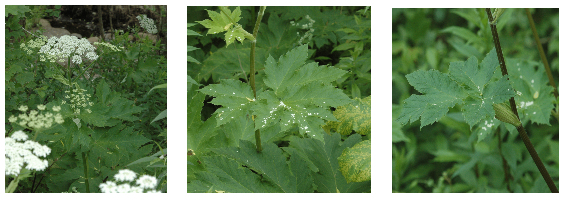
Cow Parsnip (Heracleum maximum)
- leaves broader and less serrated (toothed) than giant hogweed
- leaves are not shiny, has large leaf sheaths
- stems are usually green but lower portions can be purple but markings are not blotches, steaks or spots
- flower stalks and stems have soft hairs, not stiff hairs like giant hogweed
- usually blooms in July earlier than giant hogweed
- the inflorescence is composed of many small white flowers in a flat umbel,
- flower heads can be 20-30 cm in diameter, less than one quarter the size of giant hogweed
- can cause phytophotodermatitis similar to giant hogweed
Queen Anne’s Lace (Daucus carota)
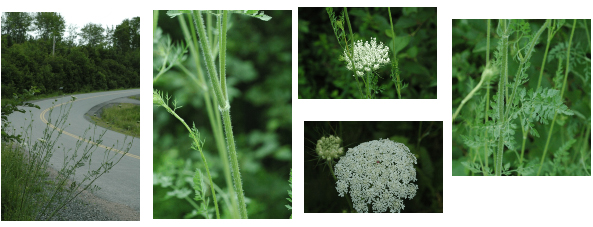
- leaves pinnate and divided repeatedly having a feathery appearence
- stems green with soft hairs, no purple
- blooms June through August
- inflorescence composed of many small white flowers in flat umbels no more than 10-15 cm in diameter
- grows up to 1 m high
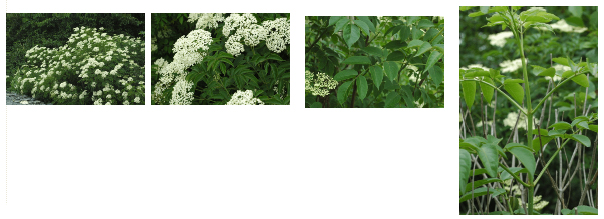
Elderberry (Sambucus spp.)
- opposite, pinnate leaves, leaflets have serrated edges
- stems woody, opposite branching
- inflorescence composed of many small white flowers in terminal cymes that may be flat topped or not
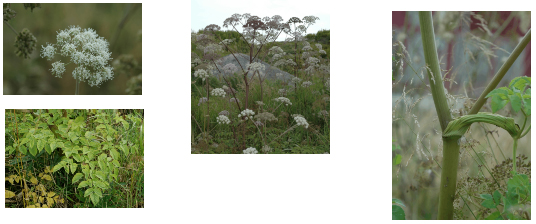
Angelica (Angelica spp.)
- compound leaves have dozens of small leaflets
- stems may be smooth or hairy, green or reddish, has enlarged leaf sheaths
- inflorescence is a large compound umbel composed of small white to greenish flowers
- plants can grow to about 2 m high
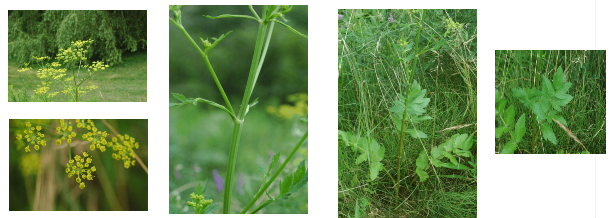
Wild Parsnip (Pastinaca sativa)
- compound pinnate leaves, leaflets are lobed and/or serrated
- stems are green with longitudinal ridges
- inflorescence is an umbel of small yellow flowers
- can grow to about 1.5 m
- can cause phytophotodermatitis similar to giant hogweed but usually less severe