

Wilderness Areas FAQs
The following are questions and answers relevant to Nova Scotia's designated wilderness areas.
Overview
Q: What are designated wilderness areas?
A: Wilderness areas are significant natural areas designated under Nova Scotia's Wilderness Areas Protection Act (the Act) and administered by the Nova Scotia Department of Environment and Climate Change (ECC). Wilderness areas protect the natural environment, while providing opportunities for education, research, wilderness recreation, camping, sport fishing, hunting and community stewardship.
Many wilderness areas are remote, yet others are near communities. A growing number have managed trails or access points.
Q: How many wilderness areas are there? Where are they?
A: Nova Scotia has more than 70 wilderness areas. You can check the list of our wilderness areas for more information or view our interactive map: https://novascotia.ca/parksandprotectedareas/plan/interactive-map.
Q: How are Nova Scotia's wilderness areas selected?
A: The province uses a science-based process to identify areas for potential protection. This includes focusing on sites with important habitat and species at risk, as well as areas representing the variety of Nova Scotia's natural landscapes. Suitability for wilderness recreation and nature tourism is another consideration.
Land selection also reflects social values — how people use, connect, and enjoy these lands — and seeks to avoid potential conflicts with uses such as settlement, agriculture, roads, forestry, mining, and energy development.
The province works closely with communities, interested organizations, Mi'kmaq, land trusts, and other conservation partners to identify areas for protection. Public consultation also plays an important role.
Nova Scotia's first 31 wilderness areas were designated in 1998, following almost 10 years of planning and consultation. Many of our newer wilderness areas were designated following release of the province's Parks and Protected Areas Plan in 2013.
Q: Who takes care of these areas?
A: Nova Scotia's wilderness areas are managed by the Department of Environment and Climate Change, including responsibility for enforcement. The Department of Lands and Forestry provides field services and other support. Some responsibilities, like managing trails, can be carried out by trail groups or other organizations through agreements with the Department of Environment and Climate Change.
Q: What activities are restricted in wilderness areas?
A: Commercial resource development, such as forestry, energy infrastructure and road building, is not permitted. Other activities, such as vehicle use, building structures or trails, and damaging or removing plants are also prohibited, except in certain circumstances as outlined in the Act. Interests, like easements, mineral exploration licenses and campsite leases, can be honoured in certain circumstances if these existed prior to designation of the wilderness area.
Protection and Stewardship
Q: Why is protection of these areas important?
A: Nova Scotia's wilderness areas are a core part of our province's contribution to a worldwide effort to protect nature and wild spaces. Protected natural spaces provide essential services, such as conserving biological diversity, protecting important habitat, improving air quality, creating and protecting soils, and providing clean water. They also store carbon and act as natural buffers to the impacts of climate change. Wilderness areas act as laboratories for monitoring the natural world and learning how ecosystems function and respond to stresses.
Nova Scotia's wilderness areas also provide high quality outdoor recreation opportunities, foster healthy lifestyles, and offer places for spiritual renewal and inspiration. They support nature tourism and other economic benefits.
Q: What can I do to support wilderness area protection?
A: Public involvement plays an important role in developing effective plans and enhancing stewardship of wilderness areas. If you or your community group is interested in becoming involved in stewardship of a specific wilderness area, please contact the appropriate regional protected areas coordinator. Visit https://novascotia.ca/nse/protectedareas/contact.asp or call 902-424-3600 for contact information.
Q: Is forest harvesting permitted?
A: No. Forest harvesting is not permitted within designated wilderness areas. However, wilderness areas and other protected natural areas are considered important components of responsible forest management.
Q: Is mining permitted?
A: Mining is not permitted in designated wilderness areas except where pre-existing mineral rights exist. In such cases, activities associated with mineral exploration and/or development must be conducted in a way that does not degrade the wilderness area, under the terms of a licence issued by the Minister of Environment.
Q: Is scientific research permitted?
A: Yes. Scientific research is encouraged, provided research activities do not degrade a wilderness area. A licence is required. Researchers who wish to obtain a licence to carry out research in a wilderness area should contact the Department of Environment and Climate Change's protected areas ecologist. Visit https://novascotia.ca/nse/protectedareas/contact.asp or call 902-424-3600 for contact information.
Q: Can I build a trail or develop a site for camping?
A: All construction, site clearing and trail management must be approved by the Department of Environment and Climate Change, typically through an agreement. Groups interested in developing hiking trails or other trails should contact the appropriate regional protected areas coordinator. Visit https://novascotia.ca/nse/protectedareas/contact.asp or call 902-424-3600 for contact information.
Q: Can I take shed antlers, harvest berries, or collect other natural materials?
A: Natural materials are protected from removal. To keep human impact to a minimum, users are encouraged to leave natural items as they are. They are important to the ecosystems which are protected in wilderness areas and add to people's wilderness experience. If you choose to pick berries for personal consumption, please keep your harvest modest, and limit picking to areas of abundance.
Q: Can I access my private land which is surrounded by a wilderness area?
A: When requested, the Minister of Environment must provide landowners a licence for access to private land that is surrounded by a wilderness area. Conditions for use may apply that clarify the type of access and how the access route will be built or maintained.
At this time, affected landowners and their guests may continue to use vehicles to access the private land along an existing, main access route, while carrying proof of land ownership. Vehicle use off this main route and construction of new routes or trails is not permitted.
For more information or to apply for a private land access licence, landowners should contact the appropriate regional protected area coordinator. Visit https://novascotia.ca/nse/protectedareas/contact.asp or call 902-424-3600 for contact information.
Recreation
Q: Are there managed trails in wilderness areas?
A: A growing number of wilderness areas have managed trails and access points.
More than 130 km of managed hiking trails in at least nine wilderness areas can be enjoyed for hiking, snowshoeing, trail running, and other adventure. Some of these are suitable for cross-country skiing.
More than 135 km of managed off-highway trails in more than 16 wilderness areas are authorized for all-terrain vehicle or snowmobile riding. These trails are managed by the All-terrain Vehicle Association of Nova Scotia (ATVANS) and Snowmobilers Association of Nova Scotia (SANS). Other activities, like hiking and skiing, are also permitted. You can find the managed off-highway vehicle trails on this interactive map: https://novascotia.ca/parksandprotectedareas/plan/interactive-map
Many wilderness areas also have "traditional" (non-maintained) access trails or routes, which can be found on some maps, on-line or by talking to other users of wilderness areas. This includes water routes which are used for canoeing, angling, sea kayaking or other activities.
Canoe-Kayak Nova Scotia (CKNS) and the Department of Environment and Climate Change have initiated efforts to manage some traditional canoe routes (water trails).
Please note that some wilderness areas are difficult to access.
For details on permitted vehicle use, please see our publication on vehicle use in wilderness areas.
Q: Do I need to register or get a permit to visit a wilderness area?
A: No. Registration or permission is not required to visit a wilderness area.
Q: Are there any special rules I need to know before going to a wilderness area?
A: Yes. There are standards and guidelines for recreational users outlined in the brochure Keep It Wild - A Guide For Low Impact Recreation In Nova Scotia's Wilderness Areas (PDF:4MB). If you choose to explore a wilderness area, please recognize that you are on your own, and accept responsibility for your personal health and safety.
Q: Are there any hiking trails in wilderness areas?
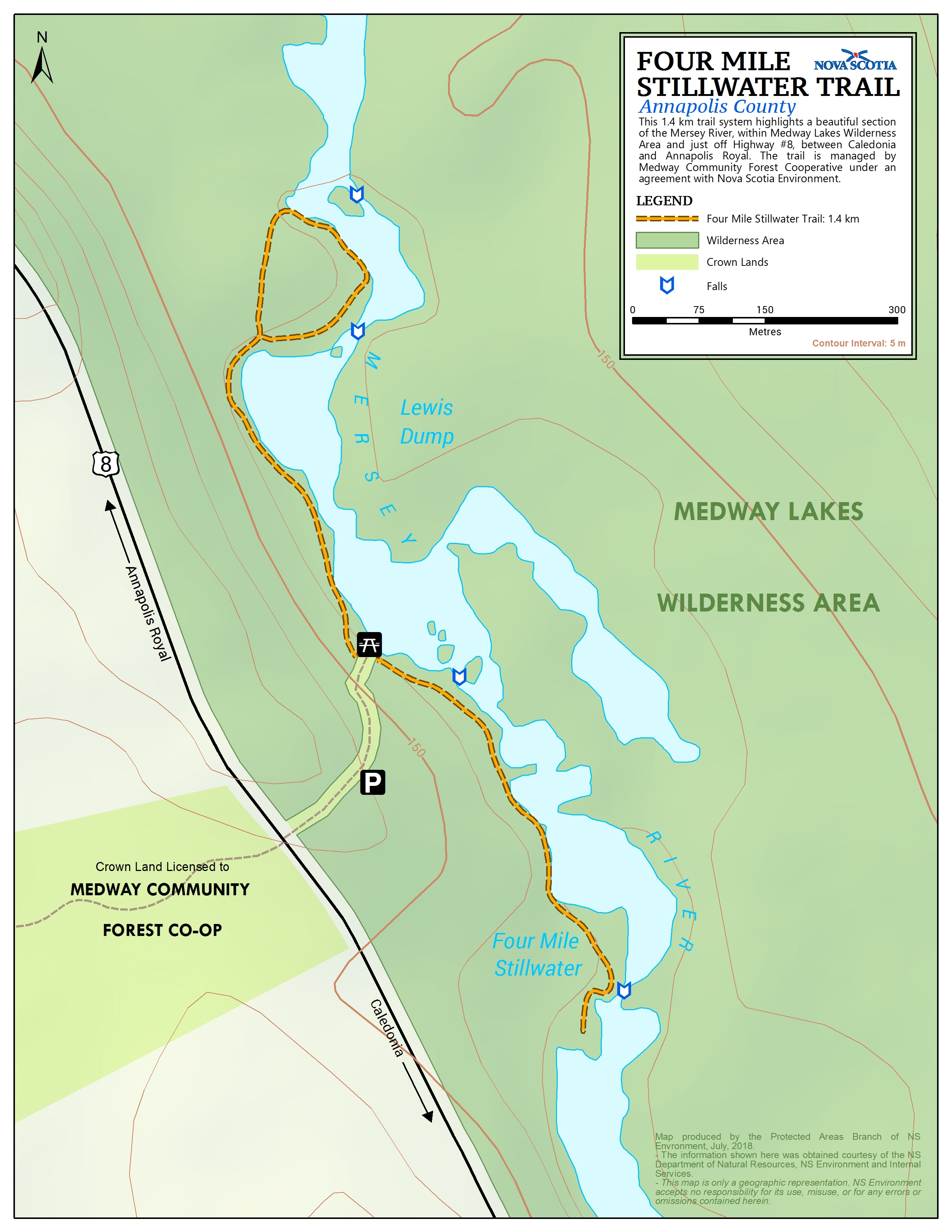
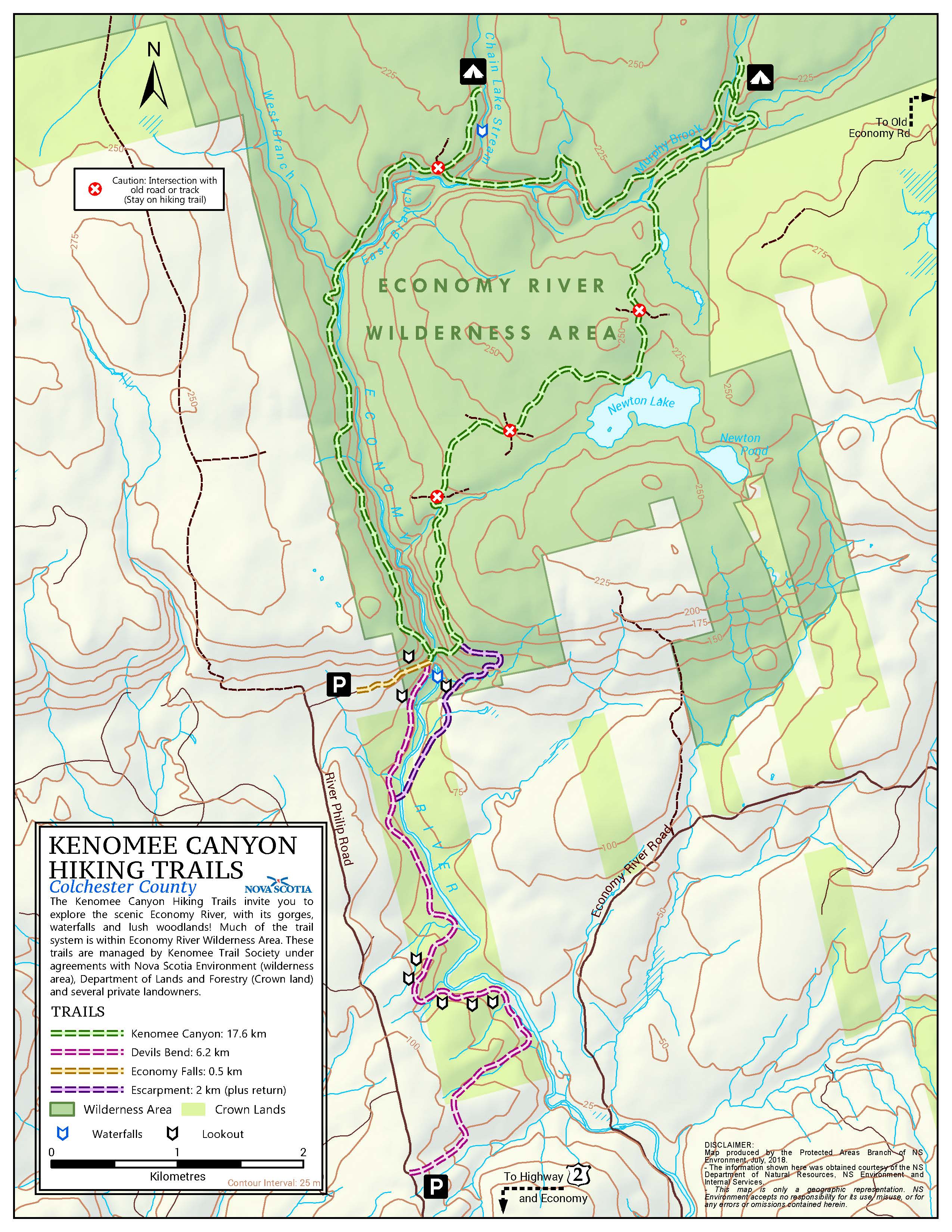
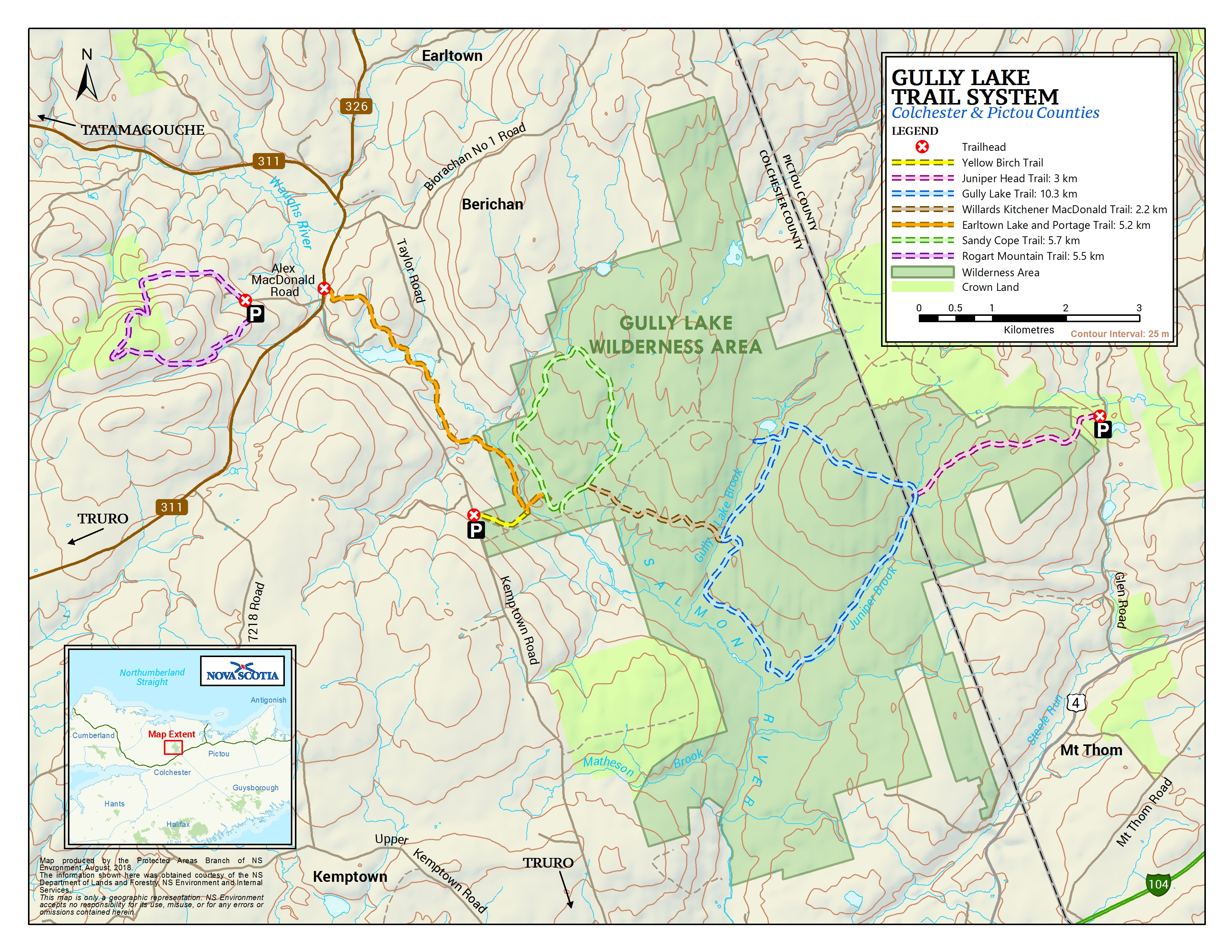
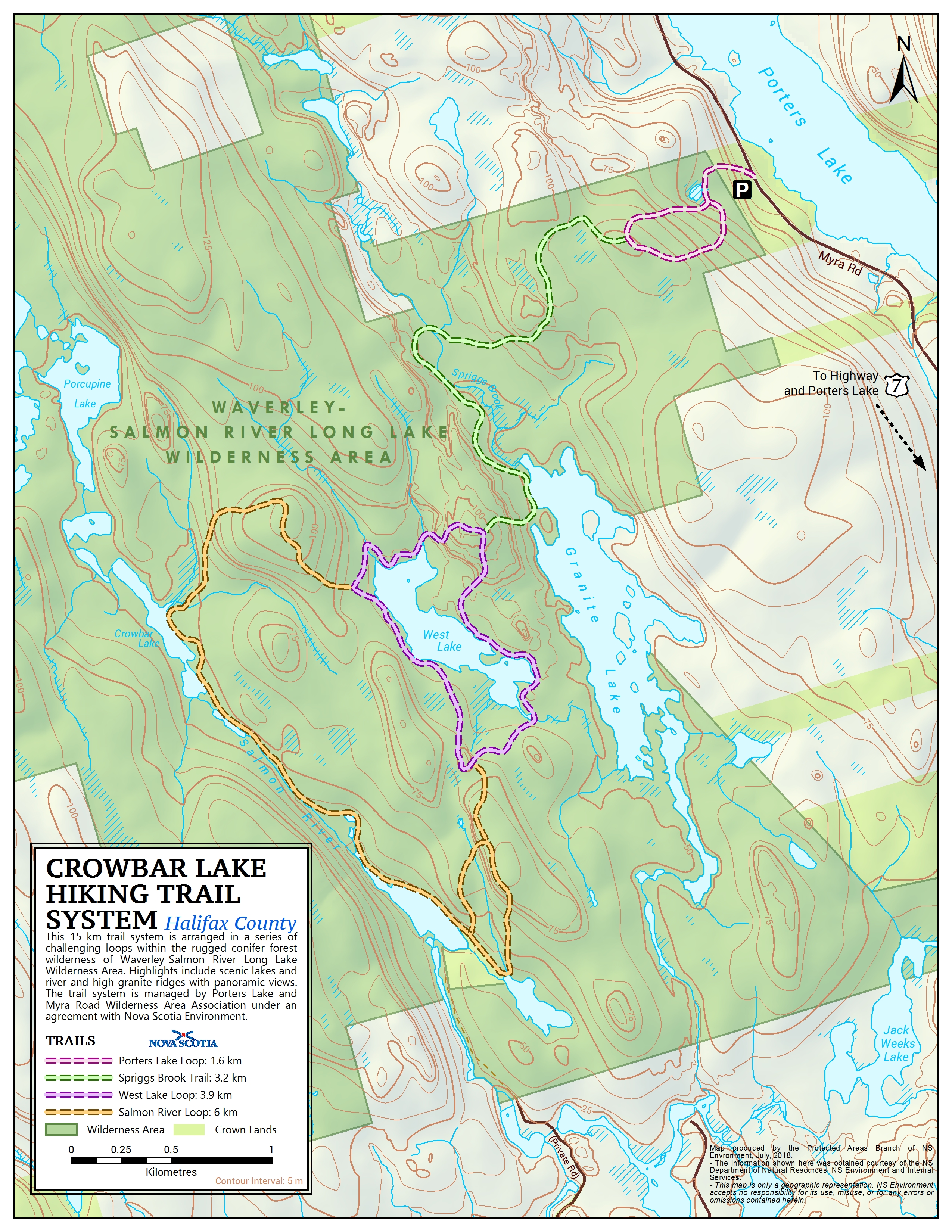
A: Yes. The following are managed hiking trails in wilderness areas:
Trail System |
County |
Wilderness Area |
Trail Map or other Web-based Information |
Four Mile Stillwater Trail |
Annapolis |
||
Kenomee Canyon Trail System |
Colchester, Cumberland |
||
Gully Lake Trail System |
Colchester, Pictou |
||
Crowbar Lake Hiking Trails |
Halifax |
||
Musquodoboit Trailways |
Halifax |
||
The Bluff Wilderness Hiking Trail |
Halifax |
Trail info – Woodens River Watershed Environmental Organization |
|
North River Falls Trail |
Victoria |
||
Gull Cove Trail |
Cape Breton |
||
Red Island Trail |
Victoria |
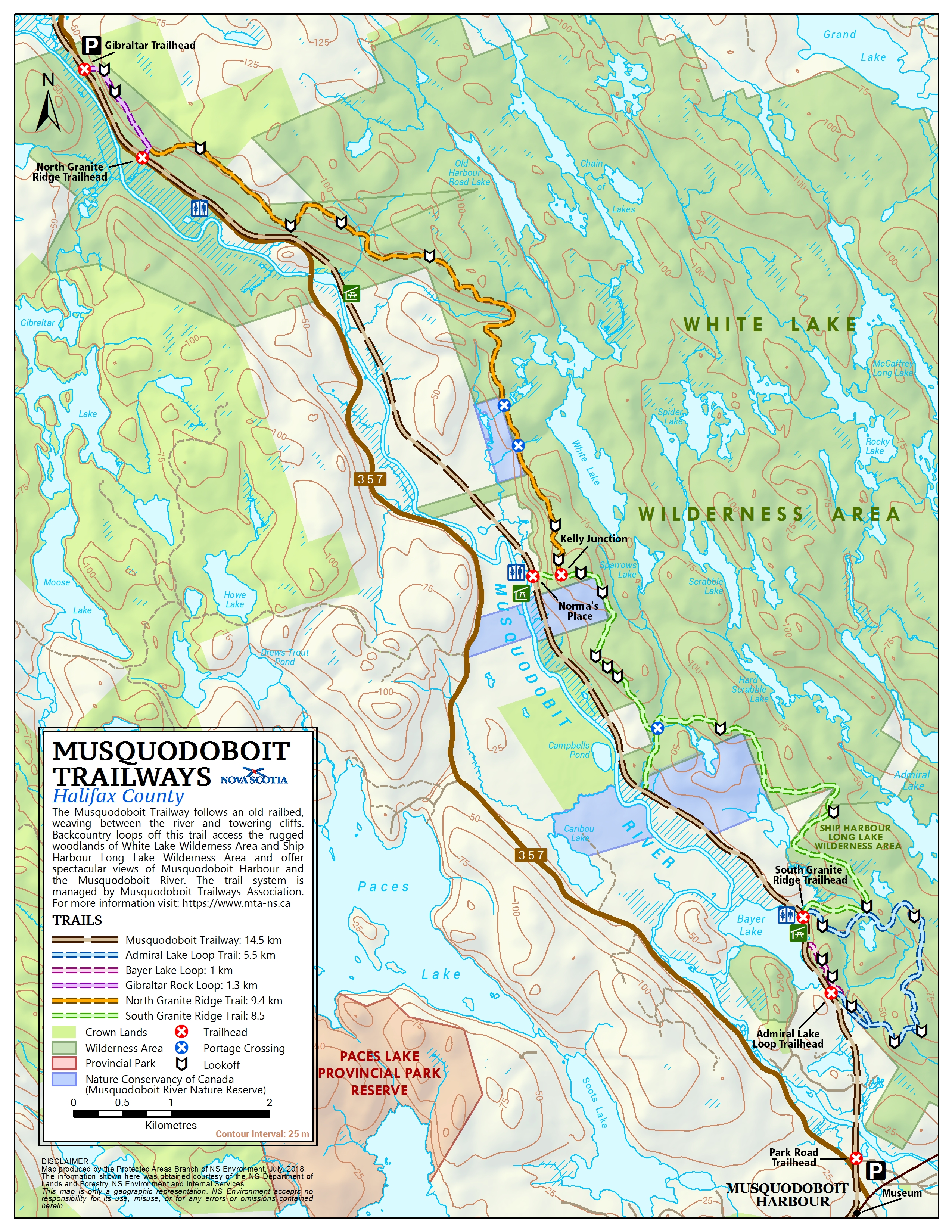
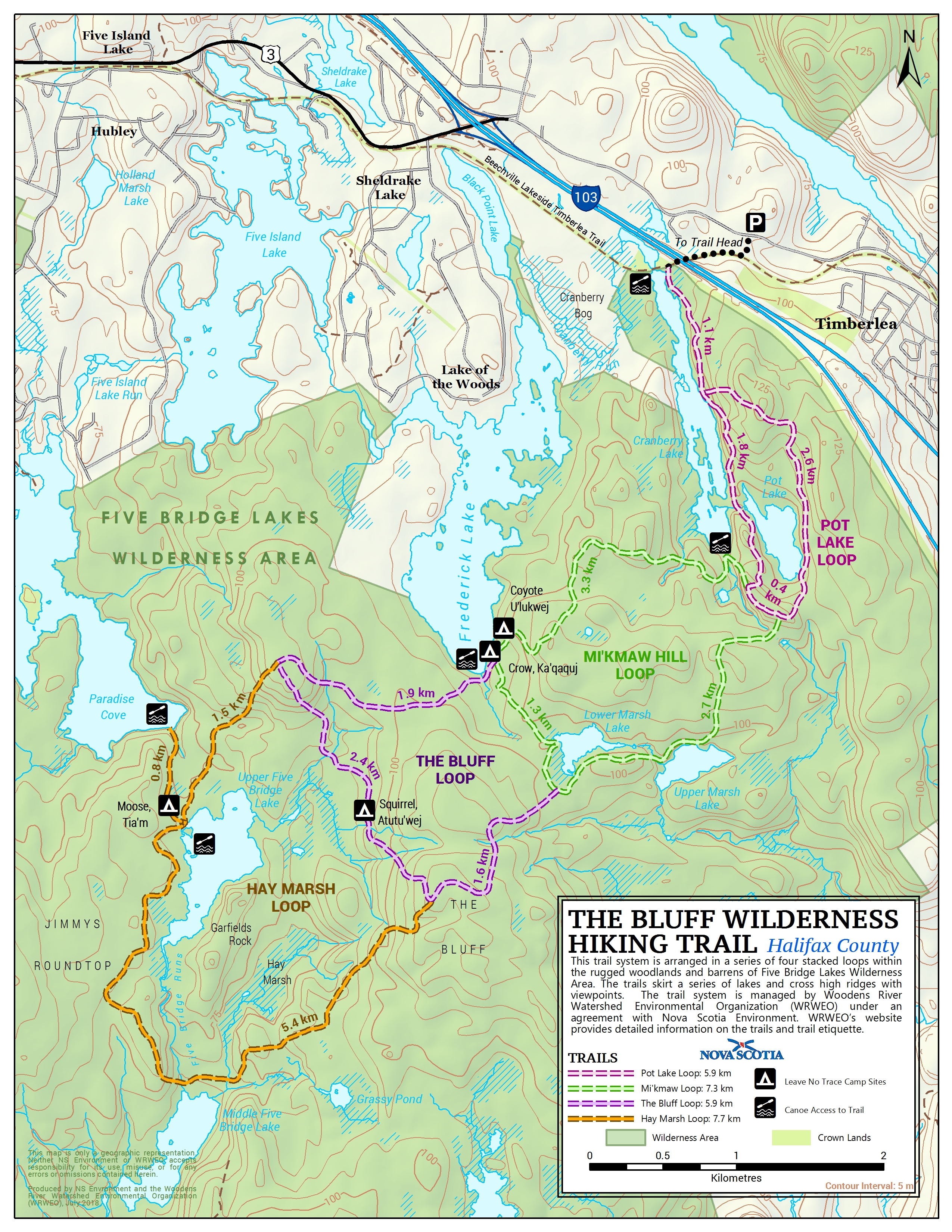
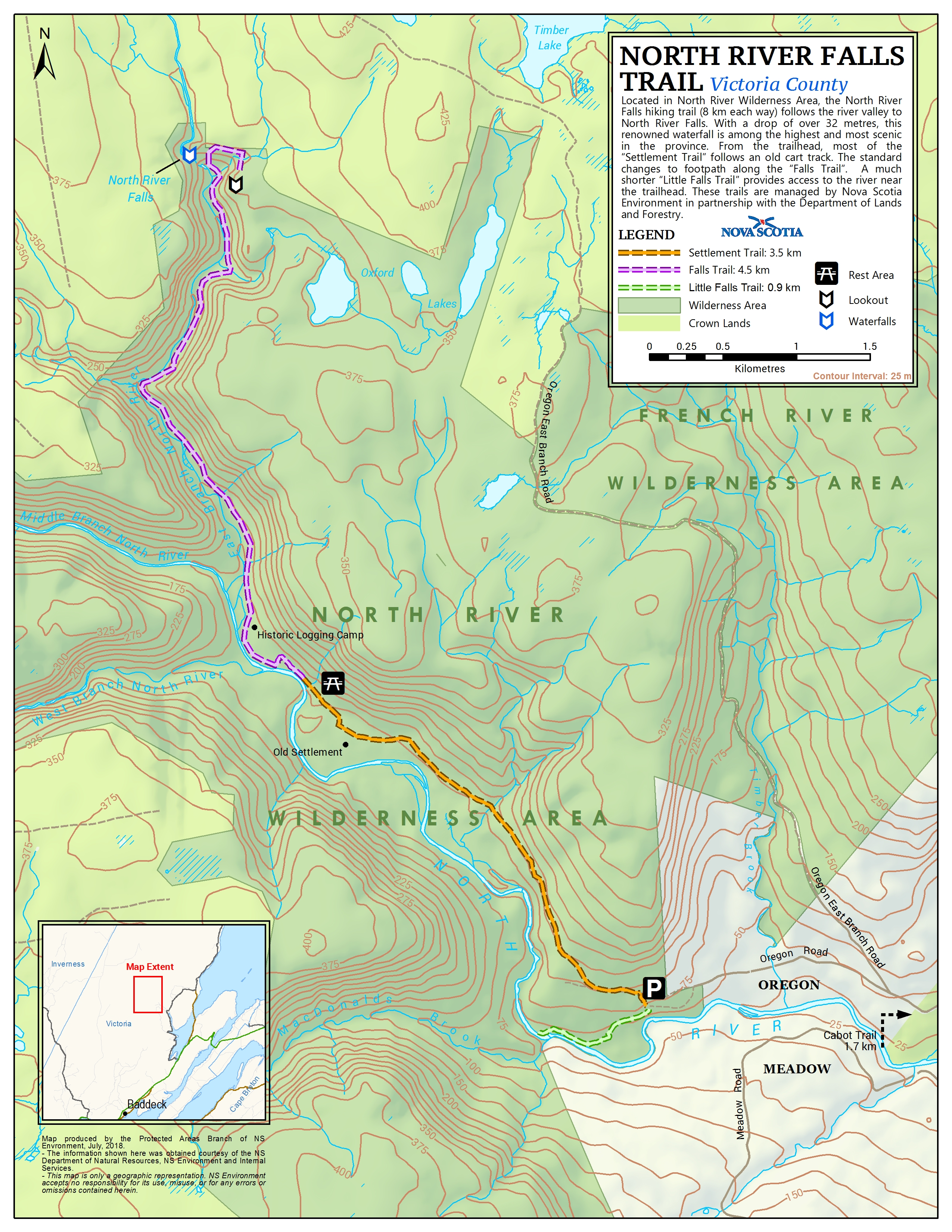
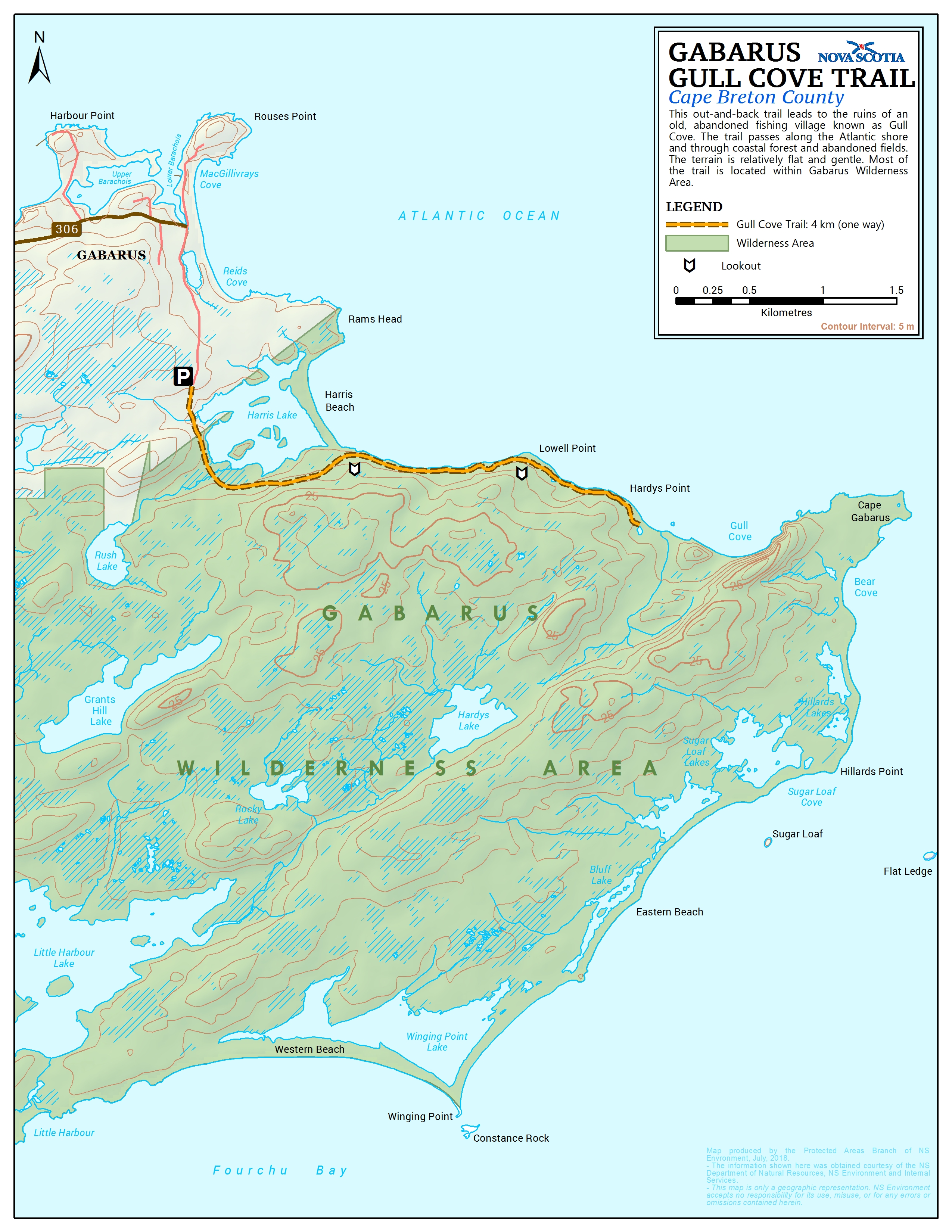

Numerous other trails are also used for walking or hiking in wilderness areas. These are not marked or maintained to any standard. Please check with someone who knows the area when considering travel on any unmaintained trails or routes.
Q: Can I camp in a wilderness area?
A: Yes. There are no drive-in campgrounds or facilities in wilderness areas, but overnight camping is generally permitted as long as you follow low-impact standards and guidelines outlined in the Keep It Wild - A Guide For Low Impact Recreation In Nova Scotia's Wilderness Areas (PDF:4mb) and Keep It Wild - Wilderness Area Standards (PDF:749k). Camping along the Kenomee Canyon Trail, at Economy River Wilderness Area, is restricted to designated sites to minimize environmental impacts. On other managed trails, you should camp well off the trail, following the above standards and guidelines.
Historic warden cabins in several wilderness areas may be used for overnighting. These cabins are remote and quite rustic. Use is on a first-come first-served basis.
Q: Can I have a campfire?
A: Campfires are permitted in existing campfire rings, or by using a fire box or pan. For details on the standards for camping and campfires, please refer to the Keep It Wild brochure, or the Order on Camping and Lighting of Fires issued by the Minister of Environment.
Q: Is sport fishing, hunting and trapping permitted?
A: Yes. Hunting, trapping, and sport fishing are generally permitted under the same rules that apply outside wilderness areas. The only current exceptions are that baiting for bear hunting is not permitted in wilderness areas, and the use of bait for deer hunting is not permitted in Tobeatic Wilderness Area.
Q: Can I use a bicycle in a wilderness area?
Use of non-motorized bicycles is permitted in wilderness areas on trails designated for this purpose. Close to 100 km of trails in more than a dozen wilderness areas are now designated for non-motorized bicycle use. You can find the trails on this interactive map: https://novascotia.ca/parksandprotectedareas/plan/interactive-map. Additional trails may be authorized for bicycle use.
Different rules apply to motorized bicycles, which are considered vehicles under the Act.
Q: Can I use a vehicle, snowmobile, or motorboat in a wilderness area?
To help protect nature and the wilderness experience, motorized vehicle use, including motorboats and aircraft, is prohibited in wilderness areas, with some exceptions.
In certain circumstances, vehicle use may be authorized on designated trails or routes through a management agreement with a group or organization.
Vehicle use can also be licensed for a variety of specific purposes.
For details, please see our publication on vehicle use in wilderness areas.
Q: Are there any guided trips in wilderness areas?
A: Yes. Occasionally, Department of Environment and Climate Change's protected areas staff or other organizations lead public outings in wilderness areas. A variety of guides and outfitters also lead trips in wilderness areas.
Q: Where can I get more information about provincial wilderness areas?
A: There is more information here: https://www.novascotia.ca/nse/protectedareas/ or you can contact us at: protectedareas@novascotia.ca