| This consolidation is unofficial and is for reference only. For the official version of the regulations, consult the original documents on file with the Office of the Registrar of Regulations, or refer to the Royal Gazette Part II. |
| Regulations are amended frequently. Please check the list of Regulations by Act to see if there are any recent amendments to these regulations filed with our office that are not yet included in this consolidation. |
| Although every effort has been made to ensure the accuracy of this electronic version, the Office of the Registrar of Regulations assumes no responsibility for any discrepancies that may have resulted from reformatting. |
| This electronic version is copyright © , Province of Nova Scotia, all rights reserved. It is for your personal use and may not be copied for the purposes of resale in this or any other form. |
Weights and Dimensions of Vehicles Regulations
made under subsection 191(1) of the
Motor Vehicle Act
R.S.N.S. 1989, c. 293
O.I.C. 2001-526 (effective November 15, 2001), N.S. Reg. 137/2001
as amended to O.I.C. 2020-065 (effective February 24, 2020), N.S. Reg. 32/2020
Table of Contents
Please note: this table of contents is provided for convenience of reference and does not form part of the regulations.
Click here to go to the text of the regulations.
Allowable vehicle configurations
Interaxle spacing requirements
Operation of vehicle in designated highway construction area
Schedule A: Vehicle Weights and Dimensions Limits
Part 1—Vehicle Weight and Dimension Limits
B. Dimensional Controls - Wheelbases, Interaxle Spacings, Overhangs, Setback and Track Width
D. Other Weight Related Limits
Part 2—Vehicle Weights and Dimensions Limits by Configuration
Category 1: Tractor Semi-trailer
Category 6: Truck - Pony Trailer Combination
Category 7: Tandem Steering Axle Truck - Pony Trailer Combination
Category 8: Truck - Full Trailer Combination
Category 9: Tandem Steering Axle Truck - Full Trailer Combination
Category 10: Intercity Bus and Recreational Vehicles
Category 10: Intercity Bus and Recreational Vehicles
Category 11: Stinger Steer Auto Carrier
Category 12: Tractor Self-Steering Quad Axle Semi-trailer
Schedule A-1: Maximum Semi-trailer Wheelbases
Schedule A-2: Pony Trailer Axle Weight Limits for Pony Trailers Model Year 2002 and Earlier
Schedule A-3: Semi-trailer Axle Weight Limits for Semi-trailers Model Year 2002 and Earlier
1 These regulations may be cited as the Weights and Dimensions of Vehicles Regulations.
2 In these regulations, unless the context otherwise requires,
Clause 2(a) repealed: O.I.C. 2010-5, N.S. Reg. 4/2010.
“1997 regulations” means the regulations respecting the weights and loads of vehicles approved by the Governor in Council by Order in Council 97-291 dated May 13, 1997;
“Act” means the Motor Vehicle Act;
“A-dolly” means a converter dolly that is towed from one hitch on the centre line of the towing vehicle;
“aerodynamic device” means a device mounted at the rear of a truck, truck tractor or trailer that is designed to reduce the drag associated with airflow around a moving vehicle and that meets all of the following criteria:
(i) any portion of the device more than 1.9 m above the ground does not protrude beyond a transverse plane starting from the rear bottom edge of the rear impact guard or, if not so equipped, the lowest point at the rear of the vehicle and intersecting with a point that is 1.74 m above the ground and 1.21 m behind the rear of the vehicle, and more than 1.52 m beyond the rear of the vehicle to which it is attached,
Subclause (i) of definition of “aerodynamic device” replaced: O.I.C. 2015-362, N.S. Reg. 364/2015.
(ii) any portion of the device within 1.9 m of the ground does not protrude,
Subclause (ii) of definition of “aerodynamic device” amended: O.I.C. 2015-362, N.S. Reg. 364/2015.
(iii) the device complies with Canadian Motor Vehicle Safety Standard 223, as amended, made under the Canadian Motor Vehicle Safety Act,
(iv) the device does not obstruct or diminish lighting and conspicuity markings required by the Act and its regulations,
(v) the device is not designed or used for carrying cargo,
(vi) the device is capable of being folded to within 0.305 m of the rear of the vehicle;
Subclause (vi) of definition of “aerodynamic device” added: O.I.C. 2015-362, N.S. Reg. 364/2015.
Definition of “aerodynamic device” added: O.I.C. 2010-5, N.S. Reg. 4/2010.
“amber warning light” means a warning light with a lens diameter of at least 12 cm and a flashing rate of 60 to 90 flashes per minute;
“A-train double” means a combination of vehicles composed of a tractor, a semi-trailer and either an A-dolly and a semi-trailer or a full trailer attached to the foremost semi-trailer in a like manner as if an A-dolly were used;
“axle” means an assembly of 2 or more wheels whose centres are in 1 transverse vertical plane and that transmits weight to the road;
“axle group” means
(i) a single axle,
(ii) a tandem axle,
(iii) a tandem equivalent axle,
(iv) a tridem axle,
(v) a tridem equivalent axle,
(vi) a triaxle, or
(vii) a self-steering quad axle;
Subclause (vii) of definition of “axle group” added: O.I.C. 2010-5, N.S. Reg. 4/2010.
“axle group weight” means the total weight transmitted to the road by an axle group;
“axle spread” means the longitudinal distance between the centres of extreme axles of an axle group;
“axle weight” means the weight transmitted to the road by an axle;
“box length” for a combination of vehicles, means the longitudinal distance from the foremost point of the cargo carrying unit(s) or cargo(s) to the rearmost part of the cargo carrying unit(s) or cargo(s), exclusive of any extension in the distance caused by auxiliary equipment or machinery at the front that is not designed or used for carrying cargo or by an aerodynamic device at the rear;
Definition of “box length” amended: O.I.C. 2010-5, N.S. Reg. 4/2010.
“B-train double” means a combination of vehicles composed of a tractor, a semi-trailer, and a second semi-trailer towed by the lower half of a fifth wheel assembly mounted on the rear of the foremost semi-trailer;
“C-dolly” means a converter dolly with a frame rigid in the horizontal plane that is towed from 2 hitches located in a horizontal transverse line on the towing unit, that precludes any rotation in the horizontal plane about the hitch points, and which satisfies all requirements of the Canadian Motor Vehicle Safety Standards applicable to such devices;
“converter dolly” means a vehicle unit that is designed and normally used to convert a semi-trailer to a full trailer;
“combination of vehicles” means 2 or more vehicles connected together;
“C-train double” means a combination of vehicles composed of a tractor, a semi-trailer, a C-dolly and a second semi-trailer;
“drawbar” means a structure connected to the chassis frame of a trailer or converter dolly that includes a device for coupling to a hitch on a towing vehicle;
“drawbar length” for a pony trailer, a full trailer or a converter dolly, means the longitudinal distance from the centre of a device that attaches to a hitch on the towing vehicle to the centre of the lower half of a fifth wheel assembly or turntable;
“drive axle” means the axle or axle group that is or may be connected to the power source of a motor vehicle and that transmits power to the wheels;
Definition of “dry bulk products” added: O.I.C. 2010-5, N.S. Reg. 4/2010; repealed: O.I.C. 2020-065, N.S. Reg. 32/2020.
“effective rear overhang” means the longitudinal distance from the centre of the rear axle or axle group on a truck or the geometric centre of the rear axle or axle group on a trailer to the rearmost point of the truck or trailer, including cargo, exclusive of any extension in the distance caused by an aerodynamic device at the rear;
Definition of “effective rear overhang” amended: O.I.C. 2010-5, N.S. Reg. 4/2010.
“fifth wheel assembly” means a coupling device for the purpose of supporting and towing a semi-trailer, whose lower half is composed of a plate and locking jaws and is mounted on the rear portion of a vehicle frame or the frame of a converter dolly and whose upper half is composed of a plate and a kingpin fastened to the underside of the forward portion of the semi-trailer;
“fifth wheel offset” for a tractor, means the longitudinal distance from the centre of the lower half of a fifth wheel assembly to the tractor turn centre;
“flashing amber light” means a warning light with a lens diameter of at least 10 cm and a flashing rate of 60 to 90 flashes per minute;
“front overhang” means the longitudinal distance from the front bumper, as installed by the manufacturer of the vehicle, to the foremost point on the vehicle or cargo, whichever is greater;
“full trailer” means a vehicle designed and used so that its weight and load is carried on its own axles, and includes a combination of vehicles consisting of a semi-trailer and a converter dolly;
“gross axle weight rating” means the value specified by the vehicle manufacturer as the load-carrying capacity of a single axle system, as measured at the tire-ground interfaces;
“gross vehicle weight” means the total weight transmitted to the road by a vehicle or combination of vehicles and cargo;
“gross vehicle weight rating” means the value specified by the vehicle manufacturer as the load-carrying capacity of a single vehicle, as measured at the tire-ground interfaces;
“hitch” means a device attached to a vehicle or converter dolly for towing another vehicle or converter dolly, and includes the lower half of a fifth wheel assembly;
“hitch offset” for a truck or a semi-trailer equipped with a hitch for towing a trailer or converter dolly, means the longitudinal distance from the turn centre of the truck or semi-trailer to the articulation point of the hitch;
“implement of husbandry” means a vehicle, with or without motive power, that is designed and used for agricultural purposes, and includes
(i) farm machinery,
(ii) a farm wagon,
(iii) a trailer when towed by a farm tractor or when towed unloaded by any other motor vehicle to or from a farm equipment dealer or repair facility
or to or from a field or farm, and
(iv) a farm tractor;
Definition of “implement of husbandry” replaced: O.I.C. 2006-547, N.S. Reg. 228/2006.
“interaxle spacing” means the longitudinal distance between the centre of the rearmost axle of an axle group and the centre of the foremost axle of the next axle group to the rear, within a vehicle or combination of vehicles;
“intercity bus” means a vehicle designed to carry more than 10 passengers and equipped with washroom facilities to allow extended travel without stopping;
“kingpin” means the pin that couples a semi-trailer to the lower half of a fifth wheel assembly;
“kingpin setback” means the horizontal distance from the vertical axis through the centre of the kingpin to the furthest point on the semi-trailer or cargo ahead of the kingpin;
“length” means
(i) for a full trailer, the external longitudinal distance from the foremost point of the cargo-carrying section of the full trailer or cargo to the rearmost point of the full trailer or cargo, exclusive of any extension in distance caused by equipment or machinery at the front that is not designed or used for carrying cargo or by an aerodynamic device at the rear,
Subclause (i) of definition of “length” amended: O.I.C. 2010-5, N.S. Reg. 4/2010.
(ii) for a pony trailer, the external longitudinal distance from the front foremost point of its drawbar or the foremost point on its cargo to the rearmost point of the pony trailer or cargo, exclusive of any extension in the distance caused by an aerodynamic device at the rear,
Subclause (ii) of definition of “length” amended: O.I.C. 2010-5, N.S. Reg. 4/2010.
(iii) for a semi-trailer, the external longitudinal distance from the front foremost point of the cargo-carrying section of the semi-trailer or cargo to the rearmost point of the semi-trailer or cargo, exclusive of any extension in distance caused by equipment or machinery at the front that is not designed or used for carrying cargo or by an aerodynamic device at the rear, and
Subclause (iii) of definition of “length” amended: O.I.C. 2010-5, N.S. Reg. 4/2010.
(iv) for a truck, the external longitudinal distance from the foremost point of the truck to the rearmost point of the truck, including cargo, exclusive of any extension in the distance caused by an aerodynamic device at the rear;
Subclause (iv) of definition of “length” amended: O.I.C. 2010-5, N.S. Reg. 4/2010.
“lift axle” means an axle fitted with a device operated by the vehicle operator that may adjust the amount of support provided to the load and may enable the axle to be removed from contact with the ground;
“liquid bulk products” mean products consisting of unpackaged free-flowing liquids that are loaded in an approved tanker trailer without being placed in bottles, bags, boxes, barrels, small tanks or any other similar containers, or hand-stowed, including all of the following:
(i) water,
(ii) milk,
(iii) petroleum products, including
(A) heating oil,
(B) fuel oil,
(C) gasoline,
(iv) liquid fertilizer,
(v) liquid chemicals,
(vi) compressed gas, including
(A) liquid oxygen,
(B) propane;
Definition of “liquid bulk products” added: O.I.C. 2010-5, N.S. Reg. 4/2010.
“load equalization” means the static weight on axle groups does not vary by more than 1000 kg between adjacent axles;
Definition of “load equalization” amended: O.I.C. 2015-362, N.S. Reg. 364/2015.
“model year” means the year used to designate a discrete vehicle model irrespective of the calender year in which the vehicle was actually produced, as indicated by the vehicle manufacturer in the vehicle identification number;
“overall height” means the vertical distance between the highest point on the vehicle or combination of vehicles, including cargo, and the surface of the road;
“overall length” means the longitudinal distance from the foremost point of a vehicle or a combination of vehicles to the rearmost point of a vehicle or combination of vehicles, including cargo, exclusive of any extension in the distance caused by an aerodynamic device at the rear;
Definition of “overall length” amended: O.I.C. 2010-5, N.S. Reg. 4/2010.
“overall width” means the greatest transverse dimension of a vehicle or combination of vehicles, including cargo;
“pony trailer” means a vehicle with one axle group close to the centre of its chassis that carries the preponderance of its weight and load, and that is towed by a drawbar that is rigidly attached to the structure of the trailer;
“raw forest products” includes saw logs, pulpwood, stud wood, round wood, veneer wood, wood chips, hog fuel and Christmas trees;
Definition of “raw forest products” added: O.I.C. 2010-5, N.S. Reg. 4/2010.
“rear overhang” means the longitudinal distance from the rearmost point of the bed or body of a vehicle to the rearmost point of the cargo, exclusive of any extension in the distance caused by an aerodynamic device at the rear;
Definition of “rear overhang” amended: O.I.C. 2010-5, N.S. Reg. 4/2010.
“self-steering axle” means an axle whose wheels can steer in response to forces generated between its tires and the road, or through mechanisms and linkages that operate independently of the driver, regardless of whether the self-steering mechanism may be rendered inoperative;
“self-steering quad axle” means an axle group composed of a self-steering axle in front of and pneumatically connected to a tridem axle;
Definition of “self-steering quad axle” added: O.I.C. 2010-5, N.S. Reg. 4/2010.
“semi-trailer” means a vehicle of the trailer type so designed and used in conjunction with a motor vehicle that some part of its own weight and that of its own load rests upon or is carried by another vehicle;
“single axle” means 1 or more axles whose centres are included between 2 parallel transverse vertical planes up to but not including 1.2 m apart and that have the same number and size of tires on each side of the axle(s);
“special permit” means any special endorsement relating to dimensions or weight on a permit issued pursuant to the Act or on a temporary permit issued pursuant to the Act;
“steering axle” means an axle whose steering is controlled by the driver of a vehicle in order to control the direction of travel of the vehicle;
“tandem axle” means an axle group containing 2 consecutive axles that does not include any liftable or self-steering axles, and that has the same number and size of tires on each axle;
“tandem equivalent axle” means an axle group of 2 consecutive axles within a vehicle, one of which is a lowered lift axle, that has the same number and size of tires on each axle;
“tandem steering axle” means a tandem axle whose axles are both steering axles;
“tire” means that part of a wheel, roller or other contrivance for the moving of any object upon a highway that comes into direct contact with the surface of the road;
“tire load rating” means the maximum load that a tire is rated to carry at a given inflation pressure, as determined by the manufacturer and stamped on the side of the tire at the time of manufacture;
“tire loading” means the weight transmitted to the road by a tire;
“tolerance” means an axle weight that is permitted by these regulations in addition to other permitted axle weights;
“track width” means the overall width of an axle across the outside faces of the tires;
“tractor” means a motor vehicle designed and normally used to pull a semi-trailer, a semi-trailer and a full trailer or a semi-trailer and another semi-trailer;
“tractor semi-trailer” means a combination of vehicles composed of a tractor and a semi-trailer;
“tractor wheelbase” means the longitudinal distance from the centre of the steering axle to the geometric centre of the drive axle;
“trailer” means a semi-trailer, a full trailer or a pony trailer;
“trailer wheelbase” means the longitudinal distance from the centre of
(i) the kingpin of a semi-trailer,
(ii) the turntable of a full trailer, or
(iii) the hitching device on a pony trailer,
to the trailer turn centre;
“triaxle” means an axle group of 3 or more consecutive axles, 1 of which is a lowered lift axle, that has the same number and size of tires on each axle;
“tridem axle” means an axle group of 3 consecutive, equally spaced axles within a vehicle that does not include any liftable or self-steering axles, and that has the same number and size of tires on each axle;
“tridem equivalent axle” means an axle group that is made up of 3 consecutive, equally spaced axles within a vehicle and that has
(i) all lift axles lowered,
(ii) the same number and size of tires on each axle, and
(iii) each of its axles attached to the vehicle by identical pneumatic suspensions that automatically provide load equalization;
Definition of “tridem equivalent axle” replaced: O.I.C. 2006-547, N.S. Reg. 228/2006.
“truck” means a motor vehicle, other than a bus,
(i) that is designed and normally used to carry cargo, and
(ii) that may operate as a single unit or may pull a trailer other than a semi-trailer;
“truck full trailer” means a combination of vehicles composed of a truck and a full trailer;
“truck pony trailer” means a combination of vehicles composed of a truck and a pony trailer;
“turn centre” means the geometric centre of the axle group on a semi-trailer or pony trailer or the geometric centre of the rear axle group on a truck, tractor or full trailer;
“turntable” means a device at the front of a full trailer that permits articulation of the front axle or axle group on the full trailer;
“vehicle identification number” means a number consisting of arabic numerals, letters of the English alphabet, or both that the manufacturer assigns to a vehicle for identification purposes;
“warning flag” means a square flag of red or orange colour with sides that are at least 400 mm in length; and
“width of tire” means the width of a tire as customarily measured and rated by manufacturers of motor vehicles and tires, and stamped on the tire at the time of manufacture.
Section 2, clause letters removed: O.I.C. 2015-362, N.S. Reg. 364/2015.
Allowable vehicle configurations
3 (1) Unless a special permit has been issued pursuant to Section 11, no person shall operate or cause to be operated upon a highway, a truck, a tractor, a semi-trailer, a full trailer, a pony trailer or any combination of these vehicles, or an intercity bus, either unladen or with load, that is not represented in Schedule A.
(2) Despite subsection (1), a person may operate or cause to be operated upon a highway a B-train double with a tridem axle group on the second semi-trailer.
(3) Despite subsection (1), a person may operate or cause to be operated upon a highway a truck, a tractor, a semi-trailer, a full trailer, a pony trailer or any combination of these vehicles represented in Schedule A, either unladen or with load, with an additional axle provided
(a) the additional axle is a lift axle;
(b) the lift axle is not in the lowered position; and
(c) all other requirements set out in Schedule A are met.
(4) Unless a special permit has been issued pursuant to Section 11, no person shall operate or cause to be operated upon a highway
(a) an A-train double;
(b) a B-train double;
(c) a C-train double;
(d) a 3 axle pony trailer; or
(e) a 16.2 m semi-trailer,
that is equipped with a lift axle other than in a tandem equivalent axle group or in a tridem equivalent axle group.
(5) Despite subsection (4), a person may operate or cause to be operated upon a highway
(a) a vehicle described in subsection (4), with an axle group weight and a gross vehicle weight that does not take into consideration the lift axle, but conforms to all other requirements as outlined in these regulations;
(b) a 3 axle pony trailer, model year 2002 and earlier, that is equipped with a lift axle other than in a tridem equivalent axle group, as long as it
Clause 3(5)(b) amended: O.I.C. 2010-5, N.S. Reg. 4/2010.
(i) conforms to the dimensional limits, axle spreads and interaxle spacings specified in the 1997 regulations,
(ii) was registered in the Province prior to coming into force of these regulations, and
(iii) has an axle group weight and a gross vehicle weight that take into consideration the lift axle; or
(c) a 16.2 m semi-trailer, model year 2002 and earlier, that is equipped with a lift axle other than in a tandem equivalent axle group or in a tridem equivalent axle group, as long as it
Clause 3(5)(c) amended: O.I.C. 2010-5, N.S. Reg. 4/2010.
(i) conforms to all other requirements set out in these regulations;
(ii) was registered in the Province prior to coming into force of these regulations, and
(iii) has an axle group weight and a gross vehicle weight that take into consideration the lift axle.
Subclause 3(5)(c)(iii) amended: O.I.C. 2002-504, N.S. Reg. 140/2002.
4 (1) Unless a special permit has been issued pursuant to Section 11, or otherwise specified in this Section, no person shall operate or cause to be operated upon a highway a vehicle or combination of vehicles that has, including any load thereon,
(a) an overall width greater than 2.6 m;
(b) an outside rear-vision mirror extending more than 300 mm on each side of the
vehicle or combination of vehicles;
(c) auxiliary equipment or devices that are not designed or used to carry cargo extending more than 100 mm on each side of the vehicle or combination of vehicles;
(d) an overall height greater than 4.15 m;
(e) an overall length greater than 12.5 m;
(f) a front overhang greater than 1.0 m;
(g) a rear overhang greater than 1.0 m, unless red warning flags are affixed to the end of the cargo; and
(h) a rear overhang greater than 2.0 m.
(2) Unless a special permit has been issued pursuant to Section 11, or otherwise specified in this Section, no person shall operate or cause to be operated upon a highway a vehicle or combination of vehicles set out in Schedule A having axle spreads or interaxle spacings other than those set out in Schedule A, and, including any load thereon, having dimensions that exceed the maximum dimension limits or are less than the minimum dimension limits set out in Schedule A.
Interaxle spacing requirements
(3) Subject to subsection 7(2), a person may operate or cause to be operated upon a highway a vehicle or combination of vehicles set out in Schedule A, except a truck with a single steering axle and a tractor, that does not meet the minimum interaxle spacing requirements set out in Schedule A, if the vehicle or combination of vehicles conforms to all other dimensional limits set out in Schedule A.
Subsection 4(3) amended: O.I.C. 2010-5, N.S. Reg. 4/2010.
(4) For a passenger vehicle, no load shall extend beyond the line of the fenders on the left side of the vehicle or extend more than 150 mm beyond the line of the fender on the right side thereof.
(5) An implement of husbandry temporarily propelled or moved upon a highway is exempt from the dimensional limits set out in this Section.
Subsection 4(5) amended: O.I.C. 2006-547, N.S. Reg. 228/2006.
(6) Despite subsection (5), no person shall propel or move upon a highway an implement of husbandry exceeding 2.6 m in overall width, unless it is equipped with
(a) a slow-moving vehicle sign, as prescribed by the regulations respecting slow-moving vehicle identification made under the Act,
(b) fluorescent flags or flashing lights mounted at the extremities of the implement of husbandry and visible for a distance of 300 m; and
(c) an amber revolving or strobe warning light visible in all directions for a distance of 300 m.
Subsection 4(6) replaced: O.I.C. 2010-5, N.S. Reg. 4/2010.
(6A) Despite clause (6)(c), if an implement of husbandry exceeding 2.6 m in width does not have motive power, the motor vehicle moving the implement of husbandry, not the implement of husbandry, must be equipped with an amber revolving or strobe warning light visible in all directions for a distance of 300 m.
Subsection 4(6A) added: O.I.C. 2010-5, N.S. Reg. 4/2010.
(6B) In addition to the requirements in subsections (6) and (6A), if any portion of an implement of husbandry extends over the centre line of the highway and the implement of husbandry exceeds 4.27 m in overall width, it must not be propelled or moved on a highway unless it is preceded by a pilot vehicle equipped with
(a) a D-sign, as prescribed by the Department of Transportation and Infrastructure Renewal, mounted in the front, and
(b) an amber revolving or strobe warning light mounted on top and visible in all directions for a distance of 300 m.
Subsection 4(6B) added: O.I.C. 2010-5, N.S. Reg. 4/2010.
(7) A person may operate or cause to be operated on a highway snow clearing equipment that has an overall width greater than 2.6 m, an overall height greater than 4.15 m and an overall length greater than 12.5 m.
(8) Road building machinery operating within a construction area is exempt from the dimensional limits set out in this Section.
Subsections 4(9)-(13) repealed: O.I.C. 2010-5, N.S. Reg. 4/2010.
5 (1) Unless a special permit has been issued pursuant to Section 11, or otherwise specified in this Section or Section 7, no person shall operate or cause to be operated upon a highway a vehicle or combination of vehicles, either unladen or with load, and equipped with pneumatic tires, having
Subsection 5(1) amended: O.I.C. 2002-504, N.S. Reg. 140/2002.
(a) a weight in excess of the weight represented upon the permit issued in respect of a vehicle or combination of vehicles by the jurisdiction;
(b) an axle weight in excess of the manufacturer’s gross axle weight rating;
(c) an axle weight in excess of the lesser of
(i) the sum of the tire load ratings of all tires installed on the wheels of any axle,
(ii) the sum of 10 kg per mm of tire width of all tires installed on the wheel of an axle for tires in excess of 150 mm in width, and
(iii) the following weights, as applicable:
(A) 9100 kg, in the case of an axle equipped with 4 tires,
(B) 9100 kg, in the case of an axle equipped with 2 tires that is a steering axle,
(C) 6000 kg, in the case of an axle equipped with 2 tires, other than a steering axle,
(D) 7700 kg, in the case of an axle equipped with 2 tires, other than a steering axle, that has tire widths of 445 mm or greater and is installed on a vehicle that is operated on a Maximum Weight Road listed in Schedule “C” to the Road List Regulations made under the Act;
Paragraph 5(1)(c)(iii)(D) amended: O.I.C. 2011-255, N.S. Reg. 232/2011.
Clause 5(1)(c) replaced: O.I.C. 2007-406, N.S. Reg. 347/2007.
(d) a weight in excess of the maximum axle weight limits specified in Schedule A for an axle group;
(e) a static weight on any axle of an axle group that is 1000 kg greater or less than the weight of an adjacent axle in the same axle group;
Clause 5(e) amended: O.I.C. 2015-362, N.S. Reg. 364/2015.
(f) a weight in excess of 4500 kg on any axle of an assembly of 2 or more consecutive axles that is not an axle group;
(g) a gross vehicle weight in excess of the manufacturer’s gross vehicle weight rating; or
Clause 5(1)(g) amended: O.I.C. 2002-504, N.S. Reg. 140/2002.
(h) a gross vehicle weight in excess of the maximum gross vehicle weight limits specified in Schedule A for a specified vehicle configuration and for a specified class of highways.
(2) No person shall move or cause to be moved over or upon a highway a vehicle or object on wheels, rollers or otherwise, other than a motor vehicle, having a weight in excess of 9100 kg.
(3) No person shall operate or cause to be operated upon a highway a vehicle, either unladen or with load, and equipped with solid rubber tires, having a weight in excess of the weight in kilograms represented upon the permit issued in respect of the vehicle or having an axle weight in excess of 75% of the vehicle weight that would otherwise apply to the vehicle.
(4) No person shall operate or cause to be operated upon any highway a vehicle, either unladen or with load, having a wheel weight in excess of 55% of the weight prescribed for any axle upon which the wheel is mounted.
6 (1) Except as otherwise permitted in these regulations, the axle weights to be used by the Registry of Motor Vehicles for calculating the maximum registered weight and issuing a permit for a vehicle or combination of vehicles set out in Schedule A are the axle weight limits set out in Schedule A.
Subsection 6(1) amended: O.I.C. 2002-504, N.S. Reg. 140/2002.
(2) The maximum gross vehicle weight set out in Schedule A shall be the maximum weight for which a vehicle or combination of vehicles described therein may be registered.
(3) The Registry of Motor Vehicles shall calculate the maximum registered weight of a truck or an intercity bus using a steering axle weight of 5500 kg unless the owner of the truck or the intercity bus has provided the Registry of Motor Vehicles with a certificate respecting the gross axle weight rating of the steering axle and such other information as may be required by the Registry of Motor Vehicles to determine a safe registered weight.
(4) The Registry of Motor Vehicles shall calculate the maximum registered weight of a tractor using a steering axle weight of 5500 kg.
Original subsection 6(4) renumbered as subsection (6), subsection 6(4) added: O.I.C. 2002-504, N.S. Reg. 140/2002.
Subsection 6(5) repealed: O.I.C. 2010-5, N.S. Reg. 4/2010.
(6) Despite any other provision of these regulations, if a vehicle registered under the laws of another province or state may be legally operated within the Province without being registered in the Province, no person shall operate the vehicle within the Province with a weight in excess of the maximum axle and gross vehicle weights set out in Schedule A for a similar vehicle registered within the Province.
Original subsection 6(4) renumbered (6): O.I.C. 2002-504, N.S. Reg. 140/2002.
7 (1) A person may operate or cause to be operated upon a highway a vehicle or combination of vehicles set out in Schedule A with a maximum single steering axle weight of 9100 kg, but with no increase in the maximum gross vehicle weight provided evidence is available to ensure the load carrying capacity of the steering axle and all other components is not exceeded.
(2) The maximum gross vehicle weight of a vehicle or combination of vehicles set out in Schedule A that does not conform to minimum interaxle spacings requirements shall be reduced by 1000 kg for each 0.5 m, or part thereof, shortfall in the minimum required interaxle spacing.
(2A) Subsection (2) does not apply to a pony trailer, model year 2002 and earlier, if the weight of the axle group of the pony trailer does not exceed the maximum weight limits set out in Schedule A-2.
Subsection 7(2A) added: O.I.C. 2010-5, N.S. Reg. 4/2010; replaced: O.I.C. 2011-255, N.S. Reg. 232/2011.
(2B) Subsection (2) does not apply to a semi-trailer, model year 2002 and earlier, if
(a) the weight of the axle group of the semi-trailer does not exceed the maximum weight limits set out in Schedule A-3; or
Clause 7(2B)(a) replaced: O.I.C. 2011-255, N.S. Reg. 232/2011.
(b) the semi-trailer meets the wheelbase requirement as set out in Schedule A.
Subsection 7(2B) added: O.I.C. 2010-5, N.S. Reg. 4/2010.
(3) The determination of an axle group weight and a gross vehicle weight shall not take into consideration a lift axle, other than as part of a tandem equivalent axle group or a tridem equivalent axle group, unless permitted by these regulations.
Subsection 7(3) replaced: O.I.C. 2010-5, N.S. Reg. 4/2010.
(4) Despite clauses 5(1)(d) and (h), a person may operate or cause to be operated on a highway, for or on behalf of the Department of Transportation and Infrastructure Renewal or a municipality, a snow clearing or ice control vehicle that exceeds the maximum axle weight limits and the maximum gross vehicle weight limits as specified in Schedule A, if the axle and gross vehicle weights do not exceed
(a) the manufacturer’s axle weight ratings,
(b) the manufacturer’s tire load ratings, and
(c) the manufacturer’s gross vehicle weight ratings.
Subsection 7(4) added: O.I.C. 2010-5, N.S. Reg. 4/2010.
8 (1) No tolerances shall be allowed for the weights determined in accordance with Sections 5, 6 and 7.
Subsection 8(1) amended: O.I.C. 2010-5, N.S. Reg. 4/2010.
(2) If the axle weight exceeds the axle weight limit determined in accordance with Sections 5, 6 and 7, the charge and penalty shall be based on the weight that is in excess of the axle weight limit.
(3) If the vehicle weight exceeds the weight represented on the permit issued in respect of the vehicle or combination of vehicles, the charge and penalty shall be based on the weight that is in excess of the weight represented on the permit issued by the jurisdiction having authority to do so.
Subsection 8(4) repealed: O.I.C. 2010-5, N.S. Reg. 4/2010.
9 (1) The classes of highways upon which a vehicle or combination of vehicles may be operated at the specified maximum gross vehicle weights set out in Schedule A are
(a) maximum weight roads, as listed in Schedule C to the Road List Regulations made under the Act;
Clause 9(1)(a) amended: O.I.C. 2011-255, N.S. Reg. 232/2011.
(b) intermediate weight roads, as listed in Schedule D to the Road List Regulations made under the Act; and
Clause 9(1)(b) amended: O.I.C. 2009-52, N.S. Reg. 32/2009; O.I.C. 2011-255, N.S. Reg. 232/2011.
(ba) B-train routes, listed in Schedule B to the Road List Regulations made under the Act;
Clause 9(1)(ba) added: O.I.C. 2010-5, N.S. Reg. 4/2010; amended: O.I.C. 2011-255, N.S. Reg. 232/2011.
(c) all other highways.
(2) Despite this Section, the Department may determine and fix a lesser maximum load that may be carried over any bridge or section of highway and may erect and maintain signs giving notice of the lesser maximum load.
(3) Where signs have been erected and maintained pursuant to subsection (2), no person shall drive or move or cause to be driven or moved over the bridge or section of the highway any vehicle or combination of vehicles having a weight, unladen or with load, in excess of the maximum load stated on the sign.
10 (1) If a permit has been issued in respect of 1 vehicle of a combination of vehicles but not in respect of the other vehicle of the combination of vehicles that is required to be registered under the Act, no person shall operate or cause to be operated the combination of vehicles upon a highway when the combination of vehicles has a weight, either unladen or with load, in excess of the weight represented on the permit issued in respect of the vehicle of the combination for which a permit has been issued, except as provided in Section 3 of the regulations respecting special permits and fees respecting self-propelled machinery, equipment or tractor used for agricultural purposes (Order in Council 72-533, N.S. Reg. 35/72) made under the Act.
(2) No person shall operate or cause to be operated upon a highway a vehicle or combination of vehicles that is required to be registered under the Act, in respect of which no permit has been issued, having a weight, either unladen or with load, in excess of 1500 kg.
11 (1) The Registry of Motor Vehicles may issue a special permit authorizing any person to operate or move a vehicle, combination of vehicles, object or structure
(a) of any dimension, or with its load placed in any manner; or
(b) that exceeds the maximum weight specified in these regulations or does not meet the specifications of Schedule A for maximum axle weight or maximum gross vehicle weight; or
(c) that is not represented in Schedule A.
(2) A special permit issued in respect of a vehicle or combination of vehicles may specify the maximum axle weights of any or all axles or of a combination of axles of the vehicle or combination of vehicles either in addition to or in lieu of specifying the total maximum gross vehicle weight of the vehicle or combination of vehicles.
(3) Application for a special permit may be made by telephone, telegram, facsimile or electronic mail, or in writing, and shall state the dimensions, estimated maximum axles weight and maximum gross vehicle weight, the highways or parts of highways over which the vehicle, object or structure is to be operated or moved and any other information the Registry of Motor Vehicles may require.
(4) A special permit may be in respect of one operation or movement of the vehicle, combination of vehicles, object or structure, or may be for operations or movements for any limited period of time or during any season of the year.
(5) A special permit shall be carried in the vehicle, combination of vehicles, object or structure to which it refers and shall be produced at the request of any peace officer.
(6) Despite the issuance of a special permit, a person who operates or causes to operate a vehicle, combination of vehicles, object or structure on or over a highway shall be liable for any damage thereby caused to that highway.
(7) A permit issued pursuant to this Section may be issued subject to conditions determined by the Department of Transportation and Public Works.
(8) The Minister of Service Nova Scotia and Municipal Relations may revoke any special permit where, in the opinion of the Minister a condition under which the permit was issued has not been complied with, or where the vehicle referred to in the permit has not been operated in compliance with the Act or regulations.
[Note: Effective June 3, 2019, the reference to the Minister of Service Nova Scotia and Municipal Relations should be read as a reference to the Minister of Service Nova Scotia and Internal Services in accordance with Order in Council 2019-149 under the Public Service Act, R.S.N.S. 1989, c. 376.]
(9) No person shall operate or cause to be operated upon a highway a vehicle or combination of vehicles for which a special permit has been issued under this Section that does not conform to the dimensions, weights, terms or conditions prescribed in the special permit.
(10) Despite subsections (1) to (9), if a vehicle or combination of vehicles is not registered for the maximum weight permitted by these regulations, the Registry of Motor Vehicles shall not issue a special permit under this Section.
Operation of vehicle in designated highway construction area
12 These regulations do not apply to the operation of a vehicle upon a highway or a portion of a highway that has been designated by the Minister of Transportation and Public Works for purposes incidental to the construction of a highway
(a) if the maximum weight allowed for the vehicle pursuant to the Act and the regulations is shown on the permit; and
(b) if the vehicle is carrying gravel, sand, stone, asphalt, cement, paving material or other material used in highway construction.
13 (1) No person shall operate or cause to be operated a truck, with or without a trailer, or a truck tractor, with or without a trailer, with a registered gross vehicle weight greater than 3000 kg on Trunk 4 from Exit 7 of Highway 104 at Thomson Station through to Exit 11 of Highway 104 at Glenholme, or the reverse, except when making a local delivery.
(2) Any person who violates subsection 13(1) is guilty of an offence and liable on summary conviction to the penalties provided for a category F offence in the Summary Proceedings Act.
Subsection 13(2) replaced: O.I.C. 2010-5, N.S. Reg. 4/2010.
Section 13 replaced: O.I.C. 2006-547, N.S. Reg. 228/2006.
14 (1) Any person who operates or causes to be operated any of the following combinations of vehicles with any load thereon on the specified highways is guilty of an offence and liable on summary conviction to the penalties provided for a category F offence in the Summary Proceedings Act:
Subsection 14(1) amended: O.I.C. 2010-5, N.S. Reg. 4/2010; O.I.C. 2013-164, N.S. Reg. 208/2013.
(a) an A-train double on any highway other than a maximum weight road;
(b) a B-train double on any highway other than a B-train route or a maximum weight road;
(c) a C-train double on any highway other than a maximum weight road.
(2) Any person who violates any of the provisions of these regulations for which no other penalty is provided is guilty of an offence and liable on summary conviction to the penalties provided for a category B offence in the Summary Proceedings Act.
Subsection 14(2) amended: O.I.C. 2010-5, N.S. Reg. 4/2010.
Section 14 added: O.I.C. 2006-547, N.S. Reg. 228/2006.
Note: Effective October 23, 2007, references to the Minister of Transportation and Public Works throughout these regulations should be read as references to the Minister of Transportation and Infrastructure Renewal in accordance with Order in Council 2007-553, under the Public Service Act, R.S.N.S. 1989, c. 376.
________________________________________________________________
Schedule A: Vehicle Weights and Dimensions Limits
Part 1 - Vehicle Weights and Dimensions Limits
Part 2 - Vehicle Weights and Dimensions Limits by Configuration
Note:The footnotes in this Schedule apply to the corresponding footnote numbers in the Section that immediately precedes the footnotes.
Note amended: O.I.C. 2002-504, N.S. Reg. 140/2002.
Dimension |
Limit |
Overall Height Limit |
Maximum 4.15 m4 |
Overall Width Limit |
Maximum 2.6 m1,2,5 |
Overall Length Limits Tractor Semi-Trailer A or C Train Double B Train Double Truck - Pony Trailer Combination Truck - Full Trailer Combination |
Maximum 23 m3,6 Maximum 25 m Maximum 27.5 m Maximum 23 m Maximum 23 m |
Box Length Limit A, B or C Train Double Truck - Pony Trailer Combination Truck - Full Trailer Combination |
Maximum 20.0 m Maximum 20.0 m Maximum 20.0 m |
Trailer Length Limits Semi-trailer Full Trailer Pony Trailer |
Maximum 16.2 m Maximum 12.5 m Maximum 12.5 m |
1 An outside rear-vision mirror may extend up to 300 mm on each side of a vehicle or combination of vehicles.
2 Auxiliary equipment or devices not designed or used to carry cargo may extend up to 100 mm on each side of a vehicle or combination of vehicles.
3 A tractor semi-trailer while being used to transport poles, pipe or material that cannot be dismembered shall have a maximum overall length limit of 25 m.
4 A tractor semi-trailer designed and being used as an auto carrier must not have an overall height exceeding 4.15 m when not loaded, and 4.30 m when loaded. The driver must ensure there is a safe clearance under any physical overpass, including structures and utility lines.
5 The load of a tractor semi-trailer designed and being used as an auto carrier that overhangs the front or rear of the tractor semi-trailer must not have an overall width that exceeds 2.1 m.
6 A tractor semi-trailer designed and being used as an auto carrier must not have an overall length exceeding 23 m when not loaded and 25 m when loaded.
Schedule A, Part 1, Section A replaced: O.I.C. 2015-362, N.S. Reg. 364/2015.
B. Dimensional Controls - Wheelbases, Interaxle Spacings, Overhangs, Setback and Track Width
Dimension |
Limit |
Tractor Wheelbase |
Maximum 6.2 m6 |
Trailer Wheelbase Semi-trailer Full Trailer Pony Trailer |
Min 6.25 m/Max 12.5 m Minimum 6.25 m Minimum 6.25 m |
Effective Rear Overhang Straight Truck Semi-trailer Full Trailer Pony Trailer |
Maximum 4.0 m Maximum 35% of wheelbase7 Maximum 35% of wheelbase Maximum 4.0 m |
Rear Overhang1 |
Maximum 2.0 m8 |
Front Overhang2 |
Maximum 1.0 m |
Kingpin Setback (Semi-trailer) |
Maximum 2.0 m radius |
Track Width Semi-trailer, Full Trailer or Pony Trailer |
Minimum 2.5 m/Maximum 2.6 m5 |
Minimum Interaxle Spacing Requirements3 Single Axle to Single Axle4 Single Axle to Tandem axle4 Single Axle to Tridem Axle Tandem Axle to Tandem Axle Tandem Axle to Tridem Axle |
Minimum 3.0 m Minimum 3.0 m Minimum 5.0 m Minimum 5.0 m Minimum 5.5 m |
1 Cargo may overhang the rear, if the overall length and effective rear overhang limits are respected. Red warning flags are required on the rear of the cargo when the rear overhang exceeds 1.0 m.
2 Cargo may overhang the front, if the overall length limit for the vehicle or vehicle combination is not exceeded, and in the case of a semi-trailer, the cargo does not extend beyond a 2.0 m radius about the kingpin.
3 A vehicle or combination of vehicles that does not comply with the minimum interaxle spacing requirements, but that complies with all other dimensional limits, will be subject to a reduction in the maximum gross vehicle weight limit of 1000 kg for each 0.5 m shortfall, or part thereof, in required interaxle spacing.
4 The minimum interaxle spacing requirement must always be met by a truck and a tractor.
5 For a semi-trailer, a full trailer and a pony trailer retrofitted with single tires equal to or greater than 445 mm in width, the minimum track width is 2.3 m.
6 A tractor wheelbase can be up to a maximum of 7.2 m, if the wheelbase of the semi-trailer is not greater than the wheelbase as set out in Schedule A-1.
7 A tractor semi-trailer designed and being used as an auto carrier must not have a rear overhang that exceeds 35% of the wheelbase when not loaded and 42% of the wheelbase when loaded.
8 A tractor semi-trailer designed and being used as an auto carrier must not have a rear overhang that exceeds 1.2 m.
Schedule A, Part 1, Section B amended: O.I.C. 2015-362, N.S. Reg. 364/2015.
Axle Type |
Application |
Spread Range |
Weight Limit |
Maximum Axle Weights for Maximum Weight Roads |
|||
Single Steering |
Straight Truck Intercity Bus Tractor |
N/A N/A N/A |
8000 kg1 7250 kg1 5500 kg1 |
Tandem Steering2 |
Straight Truck |
1.2 m to 1.85 m |
16 000 kg |
Tandem (single tires <445 mm ) (including tandem equivalent axle) |
Straight Truck, Tractor, Trailer, and Semi-trailer |
less than 1.2 m 1.2 m to 1.85 m greater than 1.85 m |
9100 kg 12 000 kg 12 000 kg |
Tandem (single tires = or >445 mm) (including tandem equivalent axle) |
Straight Truck, Tractor, Trailer, and Semi-trailer |
less than 1.2 m 1.2 m to 1.85 m greater than 1.85 m |
9100 kg 15 400 kg 15 400 kg |
Tandem (single tires < 445 mm and dual tires) (including tandem equivalent axle) |
Straight Truck, Tractor, Trailer, and Semi-trailer |
less than 1.2 m 1.2 m to 1.85 m greater than 1.85 m |
9100 kg 15 000 kg 15000 kg |
Tandem (single tires = or >445 mm and dual tires) (including tandem equivalent axle) |
Straight Truck, Tractor, Trailer, and Semi-trailer |
less than 1.2 m 1.2 m to 1.85 m greater than 1.85 m |
9100 kg 16 700 kg 16 700 kg |
Tandem (dual tires) (including tandem equivalent axle) |
Straight Truck, Tractor, Trailer, and Semi-trailer |
less than 1.2 m 1.2 m to 1.85 m greater than 1.85 m |
9100 kg 18 000 kg 18 000 kg |
Tridem (single tires < 445 mm) (including tridem equivalent axle) |
Semi-trailer |
less than 2.4 m 2.4 m to less than 3.0 m 3.0 m to less than 3.6 m 3.6 m to 3.7 m greater than 3.7 m |
12 000 kg 18 000 kg 18 000 kg 18 000 kg 12 000 kg11 |
Tridem (single tires = or >445 mm) (including tridem equivalent axle) |
Semi-trailer |
less than 2.4 m 2.4 m to less than 3.0 m 3.0 m to less than 3.6 m 3.6 m to 3.7 m greater than 3.7 m |
15 400 kg 21 000 kg 23 100 kg 23 100 kg 15 400 kg14 |
Tridem (lead axle with single tires < 445 mm and 2 axles with duals) (including tridem equivalent axle) |
Semi-trailer |
less than 2.4 m 2.4 m to less than 3.0 m 3.0 m to less than 3.6 m 3.6 m to 3.7 m greater than 3.7 m |
18 000 kg 20 000 kg 22 000 kg 23 324 kg 18 000 kg15 |
Tridem (lead axle with single tires = or > 445 mm and 2 axles with duals) (including tridem equivalent axle) |
Semi-trailer |
less than 2.4 m 2.4 m to less than 3.0 m 3.0 m to less than 3.6 m 3.6 m to 3.7 m greater than 3.7 m |
18 000 kg 21 000 kg 23 700 kg 25 034 kg 18 000 kg17 |
Tridem (dual tires) (including tridem equivalent axle) |
Semi-trailer |
less than 2.4 m 2.4 m to less than 3.0 m 3.0 m to less than 3.6 m 3.6 m to 3.7 m greater than 3.7 m |
18 000 kg 21 000 kg 24 000 kg 26 000 kg 18 000 kg6 |
Triaxle (single tires < 445 mm) |
Semi-trailer |
less than 2.4 m 2.4 m to less than 3.0 m 3.0 m to less than 3.6 m 3.6 m to 4.9 m |
9100 kg 12 000 kg11 12 000 kg11 12 000 kg11 |
Triaxle (single tires = or > 445 mm) |
Semi-trailer |
less than 2.4 m 2.4 m to less than 3.0 m 3.0 m to less than 3.6 m 3.6 m to 4.9 m |
9100 kg 15 400 kg4 15 400 kg14 15 400 kg14 |
Triaxle (lead axle with single tires < 445 mm and 2 axles with duals) |
Semi-trailer |
less than 2.4 m 2.4 m to less than 3.0 m 3.0 m to less than 3.6 m 3.6 m to 4.9 m |
9100 kg 18 000 kg12 18 000 kg13 18 000 kg15 |
Triaxle (lead axle with single tires = or > 445 mm and 2 axles with duals) |
Semi-trailer |
less than 2.4 m 2.4 m to less than 3.0 m 3.0 m to less than 3.6 m 3.6 m to 4.9 m |
9100 kg 18 000 kg4 18 000 kg16 18 000 kg17 |
Triaxle (dual tires) |
Semi-trailer |
less than 2.4 m 2.4 m to less than 3.0 m 3.0 m to less than 3.6 m 3.6 m to 4.9 m |
18 000 kg 18 000 kg4 18 000 kg5 18 000 kg6 |
Maximum Axle Weights for Intermediate Weight Roads |
|||
Single Steering |
Straight Truck Intercity Bus Tractor |
N/A N/A N/A |
8000 kg1 7250 kg1 5500 kg1 |
Tandem Steering2 |
Straight Truck |
1.2 m to 1.85 m |
16 000 kg |
Tandem (single tires) (including tandem equivalent axle) |
Straight Truck, Tractor, Trailer, and Semi-trailer |
less than 1.2 m 1.2 m to 1.85 m greater than 1.85 m |
9100 kg 12 000 kg 12 000 kg |
Tandem (single tires and dual tires) (including tandem equivalent axle) |
Straight Truck, Tractor, Trailer, and Semi-trailer |
less than 1.2 m 1.2 m to 1.85 m greater than 1.85 m |
9100 kg 15 000 kg 15 000 kg |
Tandem (dual tires) (including tandem equivalent axle) |
Straight Truck, Tractor, Trailer, and Semi-trailer |
less than 1.2 m 1.2 m to 1.85 m greater than 1.85 m |
9100 kg 18 000 kg 18 000 kg |
Tridem (single tires) (including tridem equivalent axle) |
Semi-trailer |
less than 2.4 m 2.4 m to less than 3.0 m 3.0 m to less than 3.6 m 3.6 m to 3.7 m greater than 3.7 m |
12 000 kg 18 000 kg 18 000 kg 18 000 kg 12 000 kg11 |
Tridem (lead axle with single tires and 2 axles with duals) (including tridem equivalent axle) |
Semi-trailer |
less than 2.4 m 2.4 m to less than 3.0 m 3.0 m to less than 3.6 m 3.6 m to 3.7 m greater than 3.7 m |
18 000 kg 20 000 kg 22 000 kg 22 000 kg 18 000 kg13 |
Tridem (dual tires) (including tridem equivalent axle) |
Semi-trailer |
less than 2.4 m 2.4 m to less than 3.0 m 3.0 m to less than 3.6 m 3.6 m to 3.7 m greater than 3.7 m |
18 000 kg 21 000 kg 24 000 kg 26 000 kg 18 000 kg5 |
Triaxle (single tires) |
Semi-trailer |
less than 2.4 m 2.4 m to less than 3.0 m 3.0 m to less than 3.6 m 3.6 m to 4.9 m |
9100 kg 12 000 kg11 12 000 kg11 12 000 kg11 |
Triaxle (lead axle with single tires and 2 axles with duals) |
Semi-trailer |
less than 2.4 m 2.4 m to less than 3.0 m 3.0 m to less than 3.6 m 3.6 m to 4.9 m |
9100 kg 18 000 kg12 18 000 kg13 18 000 kg15 |
Maximum Axle Weights for All Other Highways |
|||
Single Steering |
Straight Truck Intercity Bus Tractor |
N/A N/A N/A |
8000 kg1 7250 kg1 5500 kg1 |
Tandem Steering2 |
Straight Truck |
1.2 m to 1.85 m |
16 000 kg |
Tandem (single tires) (including tandem equivalent axle) |
Straight Truck, Tractor, Trailer, and Semi-trailer |
less than 1.2 m 1.2 m to 1.85 m greater than 1.85 m |
9100 kg 12 000 kg 12 000 kg |
Tandem (single tires and dual tires) (including tandem equivalent axle) |
Straight Truck, Tractor, Trailer, and Semi-trailer |
less than 1.2 m 1.2 m to 1.85 m greater than 1.85 m |
9100 kg 15 000 kg 15 000 kg |
Tandem (dual tires) (including tandem equivalent axle) |
Straight Truck, Tractor, Trailer, and Semi-trailer |
less than 1.2 m 1.2 m to 1.85 m greater than 1.85 m |
9100 kg 18 000 kg 18 000 kg |
Tridem (single tires) (including tridem equivalent axle) |
Semi-trailer |
less than 2.4 m 2.4 m to less than 3.0 m 3.0 m to less than 3.6 m 3.6 m to 3.7 m greater than 3.7 m |
12 000 kg 12 000 kg 12 000 kg 12 000 kg 12 000 kg |
Tridem (lead axle with single tires and 2 axles with duals) (including tridem equivalent axle) |
Semi-trailer |
less than 2.4 m 2.4 m to less than 3.0 m 3.0 m to less than 3.6 m 3.6 m to 3.7 m greater than 3.7 m |
18 000 kg 18 000 kg 18 000 kg 18 000 kg 18 000 kg |
Tridem (dual tires) (including tridem equivalent axle) |
Semi-trailer |
less than 2.4 m 2.4 m to less than 3.0 m 3.0 m to less than 3.6 m 3.6 m to 3.7 m greater than 3.7 m |
18 000 kg 18 000 kg 18 000 kg 18 000 kg 18 000 kg |
Triaxle (single tires) |
Semi-trailer |
less than 2.4 m 2.4 m to less than 3.0 m 3.0 m to less than 3.6 m 3.6 m to 4.9 m |
9100 kg 12 000 kg 12 000 kg 12 000 kg |
Triaxle (lead axle with single tires and 2 axles with duals) |
Semi-trailer |
less than 2.4 m 2.4 m to less than 3.0 m 3.0 m to less than 3.6 m 3.6 m to 4.9 m |
9100 kg 18 000 kg 18 000 kg 18 000 kg |
Triaxle (dual tires) |
Semi-trailer |
less than 2.4 m 2.4 m to less than 3.0 m 3.0 m to less than 3.6 m 3.6 m to 4.9 m |
18 000 kg 18 000 kg 18 000 kg 18 000 kg |
1 Steering axle loads can be as a high as 9100 kg for a vehicle or combination of vehicles if the load carrying capacity of the axles, tires, and all other components is not exceeded, and the tire loading does not exceed 10 kg/mm of tire width; however, no increase in the specified maximum gross vehicle weight limit for the configuration will be permitted with higher steering axle loads.
2 Both axles in a tandem steering axle must be actively controlled by the driver; passive or self-steering axles are not permitted.
4 This weight limit is increased to 21 000 kg for a semi-trailer model year 2002 and earlier.
5 This weight limit is increased to 24 000 kg for a semi-trailer model year 2002 and earlier.
6 This weight limit is increased to 26 000 kg for a semi-trailer model year 2002 and earlier.
11 This weight limit is increased to 18 000 kg for a semi-trailer model year 2002 and earlier.
12 This weight limit is increased to 20 000 kg for a semi-trailer model year 2002 and earlier.
13 This weight limit is increased to 22 000 kg for a semi-trailer model year 2002 and earlier.
14 This weight limit is increased to 23 100 kg for a semi-trailer model year 2002 and earlier.
15 This weight limit is increased to 23 324 kg for a semi-trailer model year 2002 and earlier.
16 This weight limit is increased to 23 700 kg for a semi-trailer model year 2002 and earlier.
17 This weight limit is increased to 25 034 kg for a semi-trailer model year 2002 and earlier.
Schedule A, Part 1, Section C replaced: O.I.C. 2007-406, N.S. Reg. 347/2007; amended: O.I.C. 2009-52, N.S. Reg. 32/2009; O.I.C. 2010-5, N.S. Reg. 4/2010; O.I.C. 2013-164, N.S. Reg. 208/2013.
D. Other Weight Related Limits
Axle Groups - Load Equalization |
Maximum 1000 kg greater or less than the static weight of an adjacent axle in the same tandem, tridem, tandem equivalent or tridem equivalent axle group |
Tire Loading - per mm of tire width - per tire (except steering axles) |
Maximum 10 kg/mm Maximum 3000 kg |
Schedule A, Part 1, Section D amended: O.I.C. 2015-362, N.S. Reg. 364/2015.
There shall be no automatically applied tolerances associated with axle or vehicle weight limits.
Schedule A, Part 1, Section E amended: O.I.C. 2006-547, N.S. Reg. 228/2006; O.I.C. 2010-5, N.S. Reg. 4/2010.
Part 2—Vehicle Weights and Dimensions Limits by Configuration
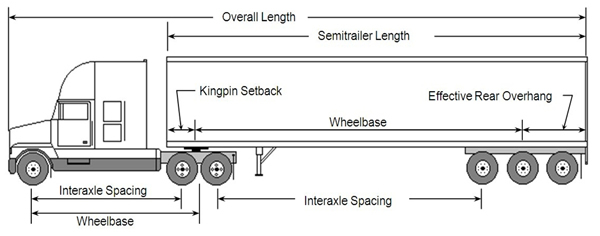
|
|
DIMENSION |
LIMIT |
Overall Length |
Maximum 23 m1, 2 |
Overall Width |
Maximum 2.6 m3 |
Overall Height |
Maximum 4.15 m4 |
Tractor |
|
Wheelbase |
Maximum 6.2 m5 |
Tandem axle spread |
Minimum 1.2 m/Maximum 1.85 m |
Semi-trailer |
|
Length |
Maximum 16.2 m |
Wheelbase |
Minimum 6.25 m/Maximum 12.5 m6 |
Kingpin setback |
Maximum 2.0 m radius |
Effective rear overhang |
Maximum 35% of wheelbase7 |
Tandem axle spread |
Minimum 1.2 m/Maximum > 1.85 m |
Tridem axle spread |
Minimum 2.4 m/Maximum 3.7 m |
Triaxle axle spread |
Minimum 2.4 m/Maximum 4.8 m |
Track width |
Minimum 2.5 m/Maximum 2.6 m |
Interaxle Spacing |
|
Single Axle to Single, Tandem, or Tridem Axle |
Minimum 3.0 m |
Tandem Axle to Tandem Axle |
Minimum 5.0 m |
Tandem Axle to Tridem Axle |
Minimum 5.5 m |
1 A tractor semi-trailer while being used to transport poles, pipe or material that cannot be dismembered must not exceed a length of 25 m.
2 A tractor semi-trailer designed and being used as an auto carrier must not exceed a length of 23 m when not loaded and 25 m when loaded.
3 The load of a tractor semi-trailer designed and being used as an auto carrier that overhangs the front or rear of the tractor semi-trailer must not have an overall width that exceeds 2.1 m.
4 A tractor semi-trailer designed and being used as an auto carrier must not have an overall height that exceeds 4.15 m when not loaded and 4.30 m when loaded. The driver must ensure there is a safe clearance under any physical overpass, including structures and utility lines.
5 A tractor wheelbase can be up to a maximum of 7.2 m, if the wheelbase of the semi-trailer is not greater than the wheelbase as set out in Schedule A-1.
6 The minimum wheelbase for a semi-trailer, model year 2002 or earlier, is 3.75 m.
7 A tractor semi-trailer designed and being used as an auto carrier must not have a rear overhang that exceeds 35% of the wheelbase when not loaded and 42% of the wheelbase when loaded.
Schedule A, Part 2, Category 1, Section 1 replaced: O.I.C. 2010-5, N.S. Reg. 4/2010.
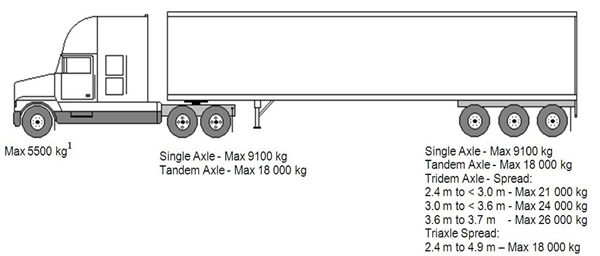
Category 1: Tractor Semi-trailer |
|
The maximum axle weight limits and maximum gross vehicle weight limits set out in this Section are for axles equipped with dual tires, except for steering axles. The maximum gross vehicle weight limit for a vehicle or combination of vehicles composed of axles equipped with single tires or a combination of single tires and dual tires is the sum of the maximum axle weight limits in Section C–Axle Weight Limits of Part 1–Vehicle Weight and Dimension Limits for the particular axles equipped with single tires or a combination of single tires and dual tires for a specified class of highway. The maximum gross vehicle weight limit of a vehicle or combination of vehicles equipped with single tires or a combination of single and dual tires must not exceed the maximum gross vehicle weight limit of a similar vehicle or combination of vehicles equipped, except for the steering axle, with dual tires for a specified class of highway. |
WEIGHT |
LIMIT |
Axle Weight Limits: |
|
Steering Axle |
Maximum 5500 kg1 |
Single Axle (dual tires) |
Maximum 9100 kg |
Tandem Axle (including tandem equivalent axle) |
|
Axle spread 1.2 m to 1.85 m |
Maximum 18 000 kg |
Axle spread > 1.85 m |
Maximum 18 000 kg |
Tridem Axle (including tridem equivalent axle) |
|
Axle spread 2.4 m to less than 3.0 m |
Maximum 21 000 kg |
Axle spread 3.0 m to less than 3.6 m |
Maximum 24 000 kg |
Axle spread 3.6 m to 3.7 m |
Maximum 26 000 kg |
Axle spread greater than 3. 7 m |
Maximum 18 000 kg4 |
Triaxle Axle |
|
Axle spread 2.4 m to less than 3.0 m |
Maximum 18 000 kg2 |
Axle spread 3.0 m to less than 3.6 m |
Maximum 18 000 kg3 |
Axle spread 3.6 m to 4.9 m |
Maximum 18 000 kg4 |
Gross Vehicle Weight Limits18: |
|
Maximum Weight Roads |
|
Three axles |
Maximum 23 700 kg |
Four axles–with tandem spread 1.2 m to 1.85 m |
Maximum 32 600 kg |
Four axles–with semi-trailer tandem spread > 1.85 m |
Maximum 32 600 kg |
Five axles–with tandem spreads 1.2 m to 1.85 m |
Maximum 41 500 kg |
Five axles–with semi-trailer tandem spread > 1.85 m |
Maximum 41 500 kg |
Five axles–with tridem spread 2.4 m to < 3.0 m |
Maximum 35 600 kg |
Five axles–with tridem spread 3.0 m to < 3.6 m |
Maximum 38 600 kg |
Five axles–with tridem spread 3.6 m to 3.7 m |
Maximum 40 600 kg |
Five axles–with tridem spread > 3.7 m |
Maximum 32 600 kg9,11 |
Five axles–with triaxle spread 2.4 m to < 3.0 m |
Maximum 32 600 kg10,12 |
Five axles–with triaxle spread 3.0 m to < 3.6 m |
Maximum 32 600 kg10,13 |
Five axles–with triaxle spread 3.6 m to 4.9 m |
Maximum 32 600 kg10,14 |
Six axles–with tridem spread 2.4 m to < 3.0 m |
Maximum 44 500 kg |
Six axles–with tridem spread 3.0 m to < 3.6 m |
Maximum 47 500 kg |
Six axles–with tridem spread 3.6 m to 3.7 m |
Maximum 49 500 kg |
Six axles–with tridem spread > 3.7 m |
Maximum 41 500 kg9,16 |
Six axles–with triaxle spread 2.4 m to < 3.0 m |
Maximum 41 500 kg5 |
Six axles–with triaxle spread 3.0 m to < 3.6 m |
Maximum 41 500 kg6 |
Six axles–with triaxle spread 3.6 m to 4.9 m |
Maximum 41 500 kg7 |
Intermediate Weight Roads |
|
Three axles |
Maximum 23 700 kg |
Four axles–with tandem spread 1.2 m to 1.85 m |
Maximum 32 600 kg |
Four axles–with semi-trailer tandem spread > 1.85 m |
Maximum 32 600 kg |
Five axles–with tandem spreads 1.2 m to 1.85 m |
Maximum 41 500 kg |
Five axles–with semi-trailer tandem spread > 1.85 m |
Maximum 41 500 kg |
Five axles–with tridem spread 2.4 m to < 3.0 m |
Maximum 35 600 kg |
Five axles–with tridem spread 3.0 m to < 3.6 m |
Maximum 38 600 kg |
Five axles–with tridem spread 3.6 m to 3.7 m |
Maximum 38 600 kg8 |
Five axles–with tridem spread > 3.7 m |
Maximum 32 600 kg9,15 |
Five axles–with triaxle spread 2.4 m to < 3.0 m |
Maximum 32 600 kg10 |
Five axles–with triaxle spread 3.0 m to < 3.6 m |
Maximum 32 600 kg10 |
Five axles–with triaxle spread 3.6 m to 4.9 m |
Maximum 32 600 kg10 |
Six axles–with tridem spread 2.4 m to < 3.0 m |
Maximum 44 500 kg |
Six axles–with tridem spread 3.0 m to < 3.6 m |
Maximum 47 500 kg |
Six axles–with tridem spread 3.6 m to 3.7 m |
Maximum 49 500 kg |
Six axles–with tridem spread > 3.7 m |
Maximum 41 500 kg9,16 |
Six axles–with triaxle spread 2.4 m to < 3.0 m |
Maximum 41 500 kg10 |
Six axles–with triaxle spread 3.0 m to < 3.6 m |
Maximum 41 500 kg10 |
Six axles–with triaxle spread 3.6 m to 4.9 m |
Maximum 41 500 kg10 |
All Other Highways |
|
Three axles |
Maximum 23 700 kg |
Four axles–with tandem spread 1.2 m to 1.85 m |
Maximum 32 600 kg |
Four axles–with semi-trailer tandem spread > 1.85 m |
Maximum 32 600 kg |
Five axles–with tandem spreads 1.2 m to 1.85 m |
Maximum 41 500 kg |
Five axles–with semi-trailer tandem spread > 1.85 m |
Maximum 41 500 kg |
Five axles–with tridem spread 2.4 m to < 3.0 m |
Maximum 32 600 kg9 |
Five axles–with tridem spread 3.0 m to < 3.6 m |
Maximum 32 600 kg9 |
Five axles–with tridem spread 3.6 m to 3.7 m |
Maximum 32 600 kg9 |
Five axles–with tridem spread > 3.7 m |
Maximum 32 600 kg9 |
Five axles–with triaxle spread 2.4 m to < 3.0 m |
Maximum 32 600 kg10 |
Five axles–with triaxle spread 3.0 m to < 3.6 m |
Maximum 32 600 kg10 |
Five axles–with triaxle spread 3.6 m to 4.9 m |
Maximum 32 600 kg10 |
Six axles–with tridem spread 2.4 m to < 3.0 m |
Maximum 41 500 kg9 |
Six axles–with tridem spread 3.0 m to < 3.6 m |
Maximum 41 500 kg9 |
Six axles–with tridem spread 3.6 m to 3.7 m |
Maximum 41 500 kg9 |
Six axles–with tridem spread > 3.7 m |
Maximum 41 500 kg9 |
Six axles–with triaxle spread 2.4 m to < 3.0 m |
Maximum 41 500 kg10 |
Six axles–with triaxle spread 3.0 m to < 3.6 m |
Maximum 41 500 kg10 |
Six axles–with triaxle spread 3.6 m to 4.9 m |
Maximum 41 500 kg10 |
1 The maximum steering axle weight can be as high as 9100 kg for a vehicle or combination of vehicles if the load-carrying capacity of the axle, tires, and all other components is not exceeded, and the tire loading does not exceed 10 kg/mm of width; however, the maximum gross vehicle weight limit will be based on a steering axle weight of 5500 kg.
2 This weight limit is 21 000 kg for a semi-trailer model year 2002 and earlier.
3 This weight limit is 24 000 kg for a semi-trailer model year 2002 and earlier.
4 This weight limit is 26 000 kg for a semi-trailer model year 2002 and earlier.
5 This weight limit is 44 500 kg for a semi-trailer model year 2002 and earlier.
6 This weight limit is 47 500 kg for a semi-trailer model year 2002 and earlier.
7 This weight limit is 49 500 kg for a semi-trailer model year 2002 or earlier.
8 The maximum tridem axle weight is 24 000 kg.
9 The maximum tridem axle weight is 18 000 kg.
10 The maximum triaxle weight is 18 000 kg.
11 This weight limit is 40 600 kg and the maximum tridem axle weight is 26 000 kg for a semi-trailer model year 2002 and earlier.
12 This weight limit is 35 600 kg and the maximum triaxle weight is 21 000 kg for a semi-trailer model year 2002 and earlier.
13 This weight limit is 38 600 kg and the maximum triaxle weight is 24 000 kg for a semi-trailer model year 2002 and earlier.
14 This weight limit is 40 600 kg and the maximum triaxle weight is 26 000 kg for a semi-trailer model year 2002 and earlier.
15 This weight limit is 38 600 kg and the maximum tridem axle weight is 24 000 kg for a semi-trailer model year 2002 and earlier.
16 This weight limit is 49 500 kg and the maximum triaxle weight is 26 000 kg for a semi-trailer model 2002 and earlier.
Footnote 17 repealed: O.I.C. 2013-164, N.S. Reg. 208/2013.
18 The maximum axle weight on Maximum Weight Roads, Intermediate Weight Roads and B-train Routes for a semi-trailer, model year 2002 and earlier, with a wheelbase less than 6.25 m but at least 3.75 m, shall be reduced by the weight as set out in Schedule A-3.
Footnote 18 amended: O.I.C. 2011-255, N.S. Reg. 232/2011.
Schedule A, Part 2, Category 1, Section 2 replaced: O.I.C. 2010-5, N.S. Reg. 4/2010; amended: O.I.C. 2013-164, N.S. Reg. 208/2013.
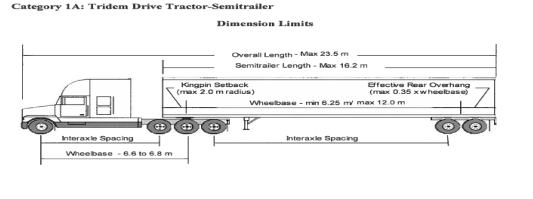
Category 1A: Tridem Drive Tractor Semi-trailer |
|
Section 1- Dimension Limits |
|
|
|
DIMENSION |
LIMIT |
Overall Length |
Maximum 23.5 m |
Overall Width |
Maximum 2.6 m |
Overall Height |
Maximum 4.15 m |
Tractor: |
|
Wheelbase |
Minimum 6.6 m/Maximum 6.8 m |
Tridem drive axle spread |
Minimum 2.4 m/Maximum 2.8 m |
Semi-trailer: |
|
Length |
Maximum 16.2 m |
Wheelbase single, tandem or tridem |
Minimum 6.25 m/Maximum 12.0 m |
Kingpin setback |
Maximum 2.0 m radius |
Effective rear overhang |
Maximum 35% of wheelbase |
Tandem axle spread |
Minimum 1.2 m/Maximum 1.85 m |
Tridem axle spread |
Minimum 2.4 m/Maximum 3.7 m |
Track width |
Minimum 2.5 m/Maximum 2.6 m |
Interaxle Spacings: |
|
Single axle to tridem axle |
Minimum 3.0 m |
Tandem axle to tridem axle |
Minimum 5.5 m |
Tridem axle to tridem axle |
Minimum 6.0 m |
Schedule A, Part 2, Category 1A, Section 1 added: O.I.C. 2015-362, N.S. Reg. 364/2015.
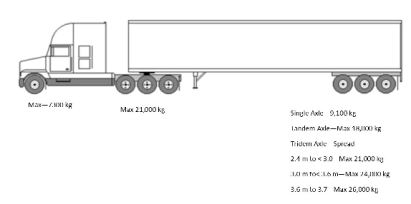
Category 1A: Tridem Drive Tractor Semi-trailer |
|
Section 2: Weight Limits |
|
|
|
WEIGHT |
LIMIT |
Axle Weight Limits: |
|
Steering Axle |
Maximum 7300 kg |
Single Axle (dual tires) |
Maximum 9100 kg |
Tandem Axle |
|
Axle spread 1.2 m - 1.85 m |
Maximum 18 000 kg |
Tridem Axle |
|
Tractor drive axle 2.4 m to 2.8 m |
Maximum 21 000 kg |
Semi-trailer axle spread 2.4 m to less than 3.0 m |
Maximum 21 000 kg |
Semi-trailer axle spread 3.0 m to less than 3.6 m |
Maximum 24 000 kg |
Semi-trailer axle spread 3.6 m to 3.7 m |
Maximum 26 000 kg |
Gross Vehicle Weight Limits: |
|
Maximum Weight Roads |
|
Single axle Semi-trailer |
Maximum 37 400 kg |
Tandem semi-trailer |
Maximum 46 300 kg |
Tridem semi-trailer 2.4 m to less than 3.0 m spread |
Maximum 49 300 kg |
Tridem semi-trailer 3.0 m to less than 3.6 m spread |
Maximum 52 300 kg |
Tridem semi-trailer 3.6 m to 3.7 m spread |
Maximum 54 300 kg |
Schedule B Weight Roads |
|
Single axle semi-trailer |
Maximum 37 400 kg |
Tandem semi-trailer |
Maximum 46 300 kg |
Tridem semi-trailer 2.4 m to less than 3.0 m spread |
Maximum 49 300 kg |
Tridem semi-trailer 3.0 m to less than 3.6 m spread |
Maximum 52 300 kg |
Tridem semi-trailer 3.6 m to 3.7 m spread |
Maximum 54 300 kg |
Intermediate Weight Roads |
|
Single axle semi-trailer |
Maximum 37 400 kg |
Tandem semi-trailer |
Maximum 46 300 kg |
Tridem semi-trailer 2.4 m to less than 3.0 m spread |
Maximum 49 300 kg |
Tridem semi-trailer 3.0 m to less than 3.6 m spread |
Maximum 49 500 kg |
Tridem semi-trailer 3.6 m to 3.7 m spread |
Maximum 49 500 kg |
All other Highways |
|
Single axle semi-trailer |
Maximum 37 400 kg |
Tandem semi-trailer |
Maximum 41 500 kg |
Tridem semi-trailer 2.4 m to less than 3.0 m spread |
Maximum 41 500 kg |
Tridem semi-trailer 3.0 m to less than 3.6 m spread |
Maximum 41 500 kg |
Tridem semi-trailer 3.6 m to 3.7 m spread |
Maximum 41 500 kg |
Schedule A, Part 2, Category 1A, Section 2 added: O.I.C. 2015-362, N.S. Reg. 364/2015.
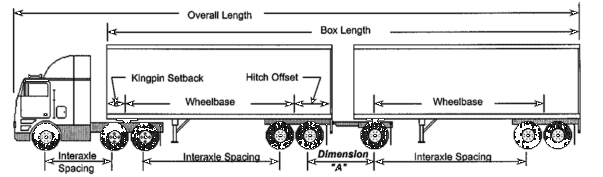
|
DIMENSION |
LIMIT |
Overall Length |
Maximum 25 m |
Overall Width |
Maximum 2.6 m |
Overall Height |
Maximum 4.15 m |
Box Length |
Maximum 20 m |
Tractor |
|
Wheelbase |
Maximum 6.2 m |
Tandem axle spread |
Minimum 1.2 m/Maximum 1.85 m |
Lead Semi-trailer |
|
Wheelbase |
Minimum 6.25 m |
Kingpin setback |
Maximum 2.0 m radius |
Tandem axle spread |
Minimum 1.2 m/Maximum 1.85 m |
Hitch offset |
Maximum 1.8 m |
Track width |
Minimum 2.5 m/Maximum 2.6 m |
Second Semi-trailer or Full Trailer |
|
Wheelbase |
Minimum 6.25 m |
Tandem axle spread |
Minimum 1.2 m/Maximum 1.85 m |
Track width |
Minimum 2.5 m/Maximum 2.6 m |
Interaxle Spacings |
|
Single Axle to Single or Tandem Axle |
Minimum 3.0 m |
Tandem Axle to Tandem Axle |
Minimum 5.0 m |
Dimension “A” (from the centre of last axle on the lead semi-trailer to the centre of the first axle on the converter dolly or second trailer) |
Not Controlled |
Category 2: A Train Double |
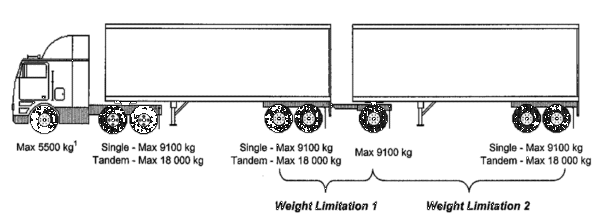
|
The maximum axle weight limits and maximum gross vehicle weight limits set out in this Section are for axles equipped with dual tires, except for steering axles. The maximum gross vehicle weight limit for a vehicle or combination of vehicles composed of axles equipped with single tires or a combination of single tires and dual tires is the sum of the maximum axle weight limits in Section C–Axle Weight Limits of Part 1–Vehicle Weight and Dimension Limits for the particular axles equipped with single tires or a combination of single tires and dual tires for a specified class of highway. The maximum gross vehicle weight limit of a vehicle or combination of vehicles equipped with single tires or a combination of single and dual tires must not exceed the maximum gross vehicle weight limit of a similar vehicle or combination of vehicles equipped, except for the steering axle, with dual tires for a specified class of highway. |
WEIGHT |
LIMIT |
Axle Weight Limits: |
|
Steering Axle |
Maximum 5500 kg1 |
Single Axle (dual tires) |
Maximum 9100 kg |
Tandem Axle (including tandem equivalent axle) |
|
Axle spread 1.2 m to 1.85 m |
Maximum 18 000 kg |
Weight Limitation 1: Sum of axle weights of lead semi-trailer plus weight of converter dolly axle |
If Dimension “A” is less than 3 metres, the weight of the axle(s) on the lead semi-trailer plus the weight of the converter dolly axle(s) is limited to a maximum of 18 000 kg for a 2 axle group or a maximum of 24 000 kg for a 3 axle group. |
Weight Limitation 2: Sum of axle weights of full trailer or second semi-trailer |
The weight of the second trailer must not exceed the weight of the tractor drive axle(s) plus the weight of the axle(s) on the first semi-trailer. |
Gross Vehicle Weight Limits: |
|
Maximum Weight Roads |
|
Five axles |
Maximum 41 900 kg |
Six axles |
Maximum 50 800 kg |
Seven axles |
Maximum 53 500 kg |
Eight axles |
Maximum 53 500 kg |
Intermediate Weight Roads |
Not allowed with any load thereon |
All Other Highways |
Not allowed with any load thereon |
1 The maximum steering axle weight can be as high as 9100 kg for a vehicle or combination of vehicles if the load carrying capacity of the axle, tires, and all other components is not exceeded, and the tire loading does not exceed 10 kg/mm of width; however, the maximum gross vehicle weight limit will be based on a steering axle weight of 5500 kg.
Schedule A, Part 2, Category 2, Section 2 amended: O.I.C. 2007-406, N.S. Reg. 347/2007; O.I.C. 2009-52, N.S. Reg. 32/2009; O.I.C. 2010-5, N.S. Reg. 4/2010; O.I.C. 2013-164, N.S. Reg. 208/2013.
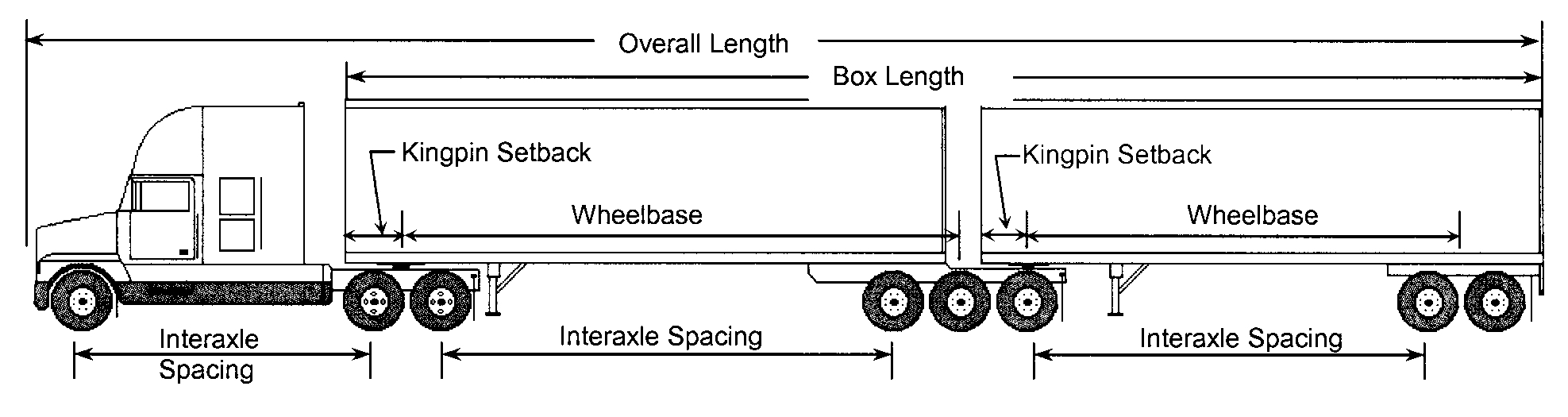
|
DIMENSION |
LIMIT |
Overall Length |
Maximum 27.5 m |
Overall Width |
Maximum 2.6 m |
Overall Height |
Maximum 4.15 m |
Box Length |
Maximum 20.0 m |
Tractor |
|
Wheelbase |
Maximum 6.8 m |
Tandem axle spread |
Minimum 1.2 m/Maximum 1.85 m |
Lead Semi-trailer |
|
Wheelbase |
Minimum 6.25 m |
Kingpin setback |
Maximum 2.0 m radius |
Tandem axle spread |
Minimum 1.2 m/Maximum 1.85 m |
Tridem axle spread |
Minimum 2.4 m/Maximum 3.1 m |
Track width |
Minimum 2.5 m/Maximum 2.6 m |
Fifth wheel position |
No more than 0.3 m behind the centre of the rearmost axle on the semi-trailer |
Second Semi-trailer |
|
Wheelbase |
Minimum 6.25 m |
Kingpin setback |
Maximum 2.0 m radius |
Tandem axle spread |
Minimum 1.2 m/Maximum 1.85 m |
Tridem axle spread |
Minimum 2.4 m/Maximum 3.1 m |
Track width |
Minimum 2.5 m/Maximum 2.6 m |
Sum of Semi-trailer Wheelbases |
|
Tractor wheelbase 6.2 m or less |
Maximum 17.00 m |
Tractor wheelbase >6.2 m to 6.3 m |
Maximum 16.53 m |
Tractor wheelbase >6.3 m to 6.4 m |
Maximum 16.44 m |
Tractor wheelbase >6.4 m to 6.5 m |
Maximum 16.36 m |
Tractor wheelbase >6.5 m to 6.6 m |
Maximum 16.27 m |
Tractor wheelbase >6.6 m to 6.7 m |
Maximum 16.19 m |
Tractor wheelbase >6.7 m to 6.8 m |
Maximum 16.10 m |
Interaxle Spacings |
|
Single axle to single or tandem axle |
Minimum 3.0 m |
Tandem axle to tandem axle |
Minimum 5.0 m |
Tandem axle to tridem axle |
Minimum 5.5 m |
Schedule A, Part 2, Category 3, Section 1 table replaced: O.I.C. 2015-362, N.S. Reg. 364/2015.
Schedule A, Part 2, Category 3, Section 1 replaced: O.I.C. 2005-583, N.S. Reg. 234/2005.
Category 3: B Train Double |
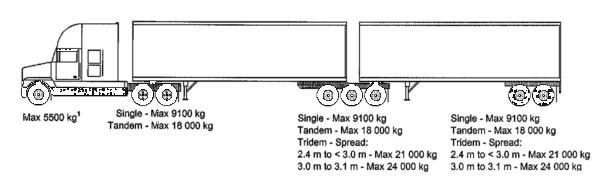
|
The maximum axle weight limits and maximum gross vehicle weight limits set out in this Section are for axles equipped with dual tires, except for steering axles. The maximum gross vehicle weight limit for a vehicle or combination of vehicles composed of axles equipped with single tires or a combination of single tires and dual tires is the sum of the maximum axle weight limits in Section C–Axle Weight Limits of Part 1–Vehicle Weight and Dimension Limits for the particular axles equipped with single tires or a combination of single tires and dual tires for a specified class of highway. The maximum gross vehicle weight limit of a vehicle or combination of vehicles equipped with single tires or a combination of single and dual tires must not exceed the maximum gross vehicle weight limit of a similar vehicle or combination of vehicles equipped, except for the steering axle, with dual tires for a specified class of highway. |
WEIGHT |
LIMIT |
Axle Weight Limits: |
|
Steering Axle |
Maximum 5500 kg1 |
Single Axle (dual tires) |
Maximum 9100 kg |
Tandem Axle (including tandem equivalent axle) |
|
Axle spread 1.2 m to 1.85 m |
Maximum 18 000 kg |
Tridem Axle |
|
Axle spread 2.4 m to less than 3.0 m |
Maximum 21 000 kg |
Axle spread 3.0 m to 3.1 m |
Maximum 24 000 kg |
Gross Vehicle Weight Limits: |
|
Maximum Weight Roads |
|
Four axles |
Maximum 32 800 kg |
Five axles |
Maximum 41 700 kg |
Six axles |
Maximum 50 600 kg |
Seven axles |
Maximum 59 500 kg |
Eight axles |
Maximum 62 500 kg |
Intermediate Weight Roads |
Not allowed2 with any load thereon |
All Other Highways |
Not allowed with any load thereon |
1 The maximum steering axle weight can be as high as 9100 kg for a vehicle or combination of vehicles if the load carrying capacity of the axle, tires, and all other components is not exceeded, and the tire loading does not exceed 10 kg/mm of width; however, the maximum gross vehicle weight limit will be based on a steering axle weight of 5500 kg.
2 For roads listed in Schedule B to the Road List Regulations made under the Act, the maximum weight is 32 800 kg for 4 axles, 41 700 kg for 5 axles, 50 600 for 6 axles, 59 500 kg for 7 axles, and 62 500 kg for 8 axles.
Schedule A, Part 2, Category 3, Section 2 amended: O.I.C. 2007-406, N.S. Reg. 347/2007; O.I.C. 2009-52, N.S. Reg. 32/2009; O.I.C. 2010-5, N.S. Reg. 4/2010; O.I.C. 2011-255, N.S. Reg. 232/2011; O.I.C. 2013-164, N.S. Reg. 208/2013.
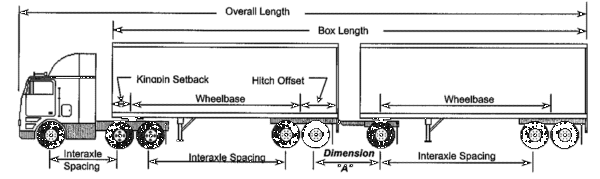
|
DIMENSION |
LIMIT |
Overall Length |
Maximum 25 m |
Overall Width |
Maximum 2.6 m |
Overall Height |
Maximum 4.15 m |
Box Length |
Maximum 20.0 m |
Tractor |
|
Wheelbase |
Maximum 6.2 m |
Tandem Axle Spread |
Minimum 1.2 m/Maximum 1.85 m |
Lead Semi-trailer |
|
Wheelbase |
Minimum 6.25 m |
Kingpin setback |
Maximum 2.0 m radius |
Tandem axle spread |
Minimum 1.2 m/Maximum 1.85 m |
Hitch offset |
Maximum 1.8 m |
Track width |
Minimum 2.5 m/Maximum 2.6 m |
Second Semi-trailer or Full Trailer |
|
Wheelbase |
Minimum 6.25 m |
Tandem axle spread |
Minimum 1.2 m/Maximum 1.85 m |
Track width |
Minimum 2.5 m/Maximum 2.6 m |
C Dolly Drawbar Length |
Maximum 2.0 m |
Interaxle Spacings |
|
Single Axle to Single or Tandem Axle |
Minimum 3.0 m |
Tandem Axle to Tandem Axle |
Minimum 5.0 m |
Dimension “A” (from the centre of last axle on the lead semi-trailer to centre of the first axle on the converter dolly or second trailer) |
Not Controlled |
Category 4: C Train Double |
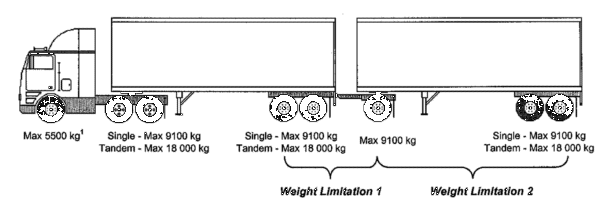
|
The maximum axle weight limits and maximum gross vehicle weight limits set out in this Section are for axles equipped with dual tires, except for steering axles. The maximum gross vehicle weight limit for a vehicle or combination of vehicles composed of axles equipped with single tires or a combination of single tires and dual tires is the sum of the maximum axle weight limits in Section C–Axle Weight Limits of Part 1–Vehicle Weight and Dimension Limits for the particular axles equipped with single tires or a combination of single tires and dual tires for a specified class of highway. The maximum gross vehicle weight limit of a vehicle or combination of vehicles equipped with single tires or a combination of single and dual tires must not exceed the maximum gross vehicle weight limit of a similar vehicle or combination of vehicles equipped, except for the steering axle, with dual tires for a specified class of highway.
|
WEIGHT |
LIMIT |
Axle Weight Limits: |
|
Steering Axle |
Maximum 5500 kg1 |
Single Axle (dual tires) |
Maximum 9100 kg |
Tandem Axle (including tandem equivalent axle) |
|
Axle spread 1.2 m to 1.85 m |
Maximum 18 000 kg |
Weight Limitation 1: Sum of axle weights of lead semi-trailer plus weight of converter dolly axle |
If Dimension “A” is less than 3 metres, the weight of the axle(s) on the lead semi-trailer plus the weight of the converter dolly axle(s) is limited to a maximum of 18 000 kg for a 2 axle group or a maximum of 24 000 kg for a 3 axle group. |
Weight Limitation 2: Sum of axle weights of full trailer or second semi-trailer |
The weight of the second trailer must not exceed the weight of the tractor drive axle(s) plus the weight of the axle(s) on the first semi-trailer. |
Gross Vehicle Weight Limits: |
|
Maximum Weight Roads |
|
Five axles |
Maximum 41 900 kg |
Six axles |
Maximum 50 800 kg |
Seven axles |
Maximum 55 600 kg |
Eight axles |
Maximum 58 500 kg |
Intermediate Weight Roads |
Not allowed with any load thereon |
All Other Highways |
Not allowed with any load thereon |
1 The maximum steering axle weight can be as high as 9100 kg for a vehicle or combination of vehicles if the load carrying capacity of the axle, tires, and all other components is not exceeded, and the tire loading does not exceed 10 kg/mm of width; however, the maximum gross vehicle weight limit will be based on a steering axle weight of 5500 kg.
Schedule A, Part 2, Category 4, Section 2 amended: O.I.C. 2007-406, N.S. Reg. 347/2007; O.I.C. 2009-52, N.S. Reg. 32/2009; O.I.C. 2010-5, N.S. Reg. 4/2010; O.I.C. 2013-164, N.S. Reg. 208/2013.
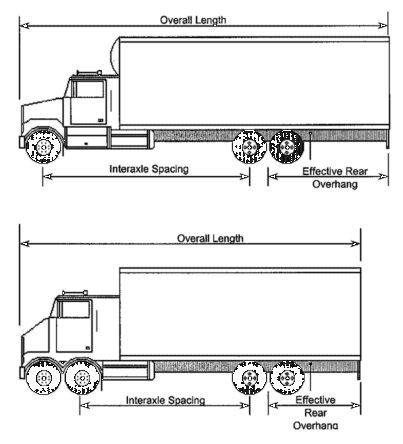
|
DIMENSION |
LIMIT |
Overall Length |
Maximum 12.5 m |
Overall Width |
Maximum 2.6 m |
Overall Height |
Maximum 4.15 m |
Box Length |
Not Controlled |
Wheelbase |
Not Controlled |
Tandem Axle Spread |
Minimum 1.2 m/Maximum 1.85 m1 |
Effective Rear Overhang |
Maximum 4.0 m |
Interaxle Spacings |
|
Single Axle to Single or Tandem Axle |
Minimum 3.0 m |
Tandem Steering Axle to Tandem Axle |
Minimum 3.65 m |
1 Maximum tandem steering axle spread is 2.2 m.
Schedule A, Part 2, Category 5, Section 1 amended: O.I.C. 2010-5, N.S. Reg. 4/2010.
Category 5: Straight Truck |
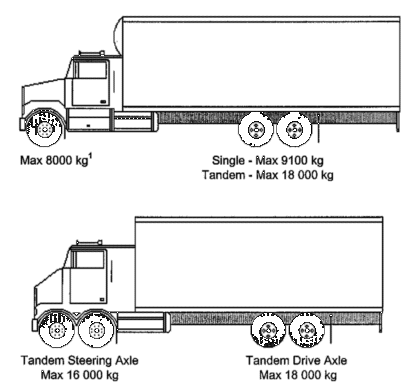
|
The maximum axle weight limits and maximum gross vehicle weight limits set out in this Section are for axles equipped with dual tires, except for steering axles. The maximum gross vehicle weight limit for a vehicle or combination of vehicles composed of axles equipped with single tires or a combination of single tires and dual tires is the sum of the maximum axle weight limits in Section C–Axle Weight Limits of Part 1–Vehicle Weight and Dimension Limits for the particular axles equipped with single tires or a combination of single tires and dual tires for a specified class of highway. The maximum gross vehicle weight limit of a vehicle or combination of vehicles equipped with single tires or a combination of single and dual tires must not exceed the maximum gross vehicle weight limit of a similar vehicle or combination of vehicles equipped, except for the steering axle, with dual tires for a specified class of highway. |
WEIGHT |
LIMIT |
Axle Weight Limits: |
|
Steering Axle - single axle, single tires |
Maximum 8000 kg1 |
- tandem axle, single tires |
Maximum 16 000 kg |
Single Axle (dual tires) |
Maximum 9100 kg |
Tandem Axle (including tandem equivalent axle) |
|
Axle spread 1.2 m to 1.85 m |
Maximum 18 000 kg |
Gross Vehicle Weight Limits: |
|
Maximum Weight Roads |
|
Two axles |
Maximum 17 100 kg |
Three axles |
Maximum 26 000 kg |
Four axles |
Maximum 34 000 kg2 |
Intermediate Weight Roads |
|
Two axles |
Maximum 17 100 kg |
Three axles |
Maximum 26 000 kg |
Four axles |
Maximum 34 000 kg2 |
All Other Highways |
|
Two axles |
Maximum 17 100 kg |
Three axles |
Maximum 26 000 kg |
Four axles |
Maximum 34 000 kg2 |
1 The maximum steering axle weight can be as high as 9100 kg for a vehicle or combination of vehicles if the load carrying capacity of the axle, tires, and all other components is not exceeded, and the tire loading does not exceed 10 kg/mm of width; however, the maximum gross vehicle weight limit will be based on a steering axle weight of 8000 kg for a single steering axle straight truck.
2 This weight limit is decreased in accordance with subsection 7(2) for a tandem steering axle truck that does not meet the interaxle spacing limit of 3.65 m.
Schedule A, Part 2, Category 5, Section 2 amended: O.I.C. 2007-406, N.S. Reg. 347/2007; O.I.C. 2009-52, N.S. Reg. 32/2009; O.I.C. 2010-5, N.S. Reg. 4/2010.
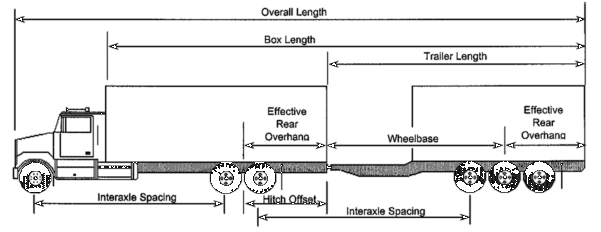
|
DIMENSION |
LIMIT |
Overall Length |
Maximum 23 m |
Overall Width |
Maximum 2.6 m |
Overall Height |
Maximum 4.15 m |
Box Length |
Maximum 20 m |
Truck |
|
Length |
Maximum 12.5 m |
Wheelbase |
Not Controlled |
Tandem axle spread |
Minimum 1.2 m/Maximum 1.85 m |
Effective rear overhang |
Maximum 4.0 m |
Hitch offset1 |
Maximum 1.8 m |
Pony Trailer1 |
|
Length |
Maximum 12.5 m |
Wheelbase |
Minimum 6.25 m |
Tandem axle spread |
Minimum 1.2 m/Maximum 1.85 m |
Tridem axle spread |
Minimum 2.4 m/Maximum 3.7 m |
Track width |
Minimum 2.5 m/Maximum 2.6 m |
Effective rear overhang |
Maximum 4.0 m |
Interaxle Spacings |
|
Single Axle to Single, Tandem or Tridem Axle |
Minimum 3.0 m |
Tandem Axle to Tandem Axle |
Minimum 5.0 m |
Tandem Axle to Tridem Axle |
Minimum 5.5 m |
1 Dimension limits not applicable to pony trailers with gross vehicle weight rating of less than 10 000 kg.
Schedule A, Part 2, Category 6, Section 1 amended: O.I.C. 2010-5, N.S. Reg. 4/2010; O.I.C. 2011-255, N.S. Reg. 232/2011; O.I.C. 2013-164, N.S. Reg. 208/2013.
Category 6: Truck - Pony Trailer Combination |
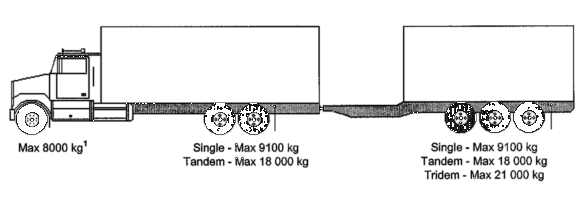
|
The maximum axle weight limits and maximum gross vehicle weight limits set out in this Section are for axles equipped with dual tires, except for steering axles. The maximum gross vehicle weight limit for a vehicle or combination of vehicles composed of axles equipped with single tires or a combination of single tires and dual tires is the sum of the maximum axle weight limits in Section C–Axle Weight Limits of Part 1–Vehicle Weight and Dimension Limits for the particular axles equipped with single tires or a combination of single tires and dual tires for a specified class of highway. The maximum gross vehicle weight limit of a vehicle or combination of vehicles equipped with single tires or a combination of single and dual tires must not exceed the maximum gross vehicle weight limit of a similar vehicle or combination of vehicles equipped, except for the steering axle, with dual tires for a specified class of highway. |
WEIGHTS |
LIMITS |
Axle Weight Limits: |
|
Steering Axle |
Maximum 8000 kg1 |
Single Axle (dual tires) |
Maximum 9100 kg |
Tandem Axle (including tandem equivalent axle) |
|
Axle spread 1.2 m to 1.85 m |
Maximum 18 000 kg2 |
Tridem Axle |
|
Axle spread 2.4 m - 3.7 m |
Maximum 21 000 kg2 |
Gross Vehicle Weight Limits: |
|
Maximum Weight Roads |
|
Three axles |
Maximum 26 200 kg |
Four axles |
Maximum 35 100 kg |
Five axles |
Maximum 44 000 kg |
Six axles |
Maximum 47 000 kg |
Intermediate Weight Roads |
|
Three axles |
Maximum 26 200 kg |
Four axles |
Maximum 35 100 kg |
Five axles |
Maximum 44 000 kg |
Six axles |
Maximum 47 000 kg |
All Other Highways |
|
Three axles |
Maximum 26 200 kg |
Four axles |
Maximum 35 100 kg |
Five axles |
Maximum 41 500 kg |
Six axles |
Maximum 41 500 kg |
1 The maximum steering axle weight can be as high as 9100 kg for a vehicle or combination of vehicles if the load carrying capacity of the axle, tires, and all other components is not exceeded, and the tire loading does not exceed 10 kg/mm of width; however, the maximum gross vehicle weight limit will be based on a steering axle weight of 8000 kg.
2 The maximum axle weights of 2-axle and 3-axle pony trailers that are model year 2002 and earlier with a wheelbase less than 6.25 m are as set out in Schedule A-2.
Schedule A, Part 2, Category 6, Section 2 amended: O.I.C. 2007-406, N.S. Reg. 347/2007; O.I.C. 2009-52, N.S. Reg. 32/2009; O.I.C. 2010-5, N.S. Reg. 4/2010; O.I.C. 2011-255, N.S. Reg. 232/2011.
Category 7: Tandem Steering Axle Truck - Pony Trailer Combination |
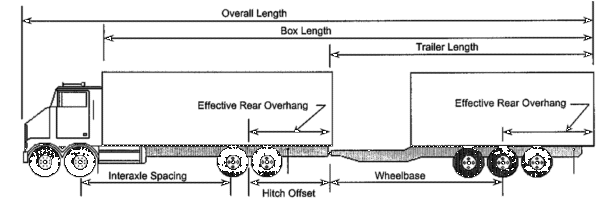
|
DIMENSION |
LIMIT |
Overall Length |
Maximum 23 m |
Overall Width |
Maximum 2.6 m |
Overall Height |
Maximum 4.15 m |
Box Length |
Maximum 20 m |
Truck |
|
Length |
Maximum 12.5 m |
Wheelbase |
Not Controlled |
Tandem steering axle spread |
Minimum 1.2 m/Maximum 2.2 m |
Tandem drive axle spread |
Minimum 1.2 m/Maximum 1.85 m |
Effective rear overhang |
Maximum 4.0 m |
Hitch offset1 |
Maximum 1.8 m |
Pony Trailer1 |
|
Length |
Maximum 12.5 m |
Wheelbase |
Minimum 6.25 m |
Tandem axle spread |
Minimum 1.2 m/Maximum 1.85 m |
Tridem axle spread |
Minimum 2.4 m/Maximum 3.7 m |
Track width |
Minimum 2.5 m/Maximum 2.6 m |
Effective rear overhang |
Maximum 4.0 m |
Interaxle Spacings |
|
Tandem Steering Axle to Tandem Drive Axle |
Minimum 3.65 m |
Single Axle to Single, Tandem or Tridem Axle |
Minimum 3.0 m |
Tandem Axle to Tandem Axle |
Minimum 5.0 m |
Tandem Axle to Tridem Axle |
Minimum 5.5 m |
1 Dimension limits not applicable to pony trailers with gross vehicle weight rating of less than 10 000 kg.
Schedule A, Part 2, Category 7, Section 1 amended: O.I.C. 2010-5, N.S. Reg. 4/2010; erratum in O.I.C. 2010-5 corrected by O.I.C. 2010-117, N.S. Reg. 47/2010; amended: O.I.C. 2011-255, N.S. Reg. 232/2011; O.I.C. 2013-164, N.S. Reg. 208/2013.
Category 7: Tandem Steering Axle Truck - Pony Trailer Combination |
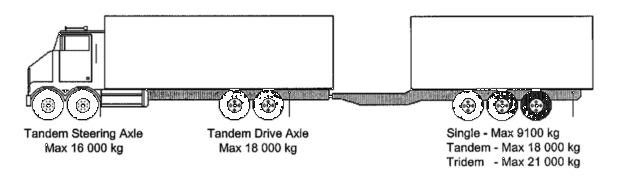
|
The maximum axle weight limits and maximum gross vehicle weight limits set out in this Section are for axles equipped with dual tires, except for steering axles. The maximum gross vehicle weight limit for a vehicle or combination of vehicles composed of axles equipped with single tires or a combination of single tires and dual tires is the sum of the maximum axle weight limits in Section C–Axle Weight Limits of Part 1–Vehicle Weight and Dimension Limits for the particular axles equipped with single tires or a combination of single tires and dual tires for a specified class of highway. The maximum gross vehicle weight limit of a vehicle or combination of vehicles equipped with single tires or a combination of single and dual tires must not exceed the maximum gross vehicle weight limit of a similar vehicle or combination of vehicles equipped, except for the steering axle, with dual tires for a specified class of highway. |
WEIGHTS |
LIMITS |
Axle Weight Limits: |
|
Truck |
|
Tandem Steering Axle: spread 1.2 m to 2.2 m |
Maximum 16 000 kg |
Tandem Drive Axle: spread 1.2 m to 1.85 m |
Maximum 18 000 kg |
Trailer |
|
Single Axle (dual tires) |
Maximum 9100 kg |
Tandem Axle: spread 1.2 m to 1.85 m |
Maximum 18 000 kg1 |
Tridem Axle: spread 2.4 m to 3.7 m |
Maximum 21 000 kg1 |
Gross Vehicle Weight Limits: |
|
Maximum Weight Roads |
|
Five axles |
Maximum 43 100 kg4 |
Six axles |
Maximum 50 000 kg4 |
Seven axles |
Maximum 53 500 kg4 |
Intermediate Weight Roads |
|
Five axles |
Maximum 43 100 kg4 |
Six axles |
Maximum 49 500 kg4 |
Seven axles |
Maximum 49 500 kg4 |
All Other Highways |
|
Five axles |
Maximum 41 500 kg4 |
Six axles |
Maximum 41 500 kg4 |
Seven axles |
Maximum 41 500 kg4 |
1 The maximum axle weights of 2-axle and 3-axle pony trailers that are model 2002 and earlier with a wheelbase less than 6.25 m are as set out in Schedule A-2.
4 This weight limit is decreased in accordance with subsection 7(2) for a combination of vehicles with a tandem steering axle truck that does not meet the interaxle spacing limit of 3.65 m.
Schedule A, Part 2, Category 7, Section 2 amended: O.I.C. 2007-406, N.S. Reg. 347/2007; O.I.C. 2009-52, N.S. Reg. 32/2009; O.I.C. 2010-5, N.S. Reg. 4/2010; O.I.C. 2011-255, N.S. Reg. 232/2011; O.I.C. 2013-164, N.S. Reg. 208/2013.
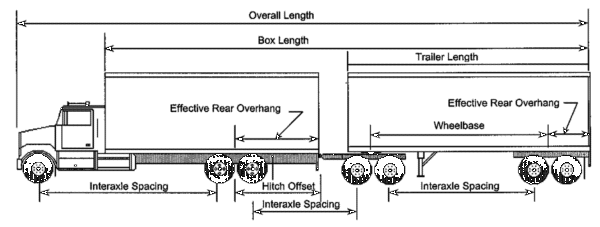
|
DIMENSION |
LIMIT |
Overall Length |
Maximum 23 m |
Overall Width |
Maximum 2.6 m |
Overall Height |
Maximum 4.15 m |
Box Length |
Maximum 20 m |
Truck |
|
Length |
Maximum 12.5 m |
Wheelbase |
Not Controlled |
Tandem axle spread |
Minimum 1.2 m/Maximum 1.85 m |
Effective rear overhang |
Maximum 4.0 m |
Hitch offset |
Maximum 1.8 m |
Full Trailer |
|
Length |
Maximum 12.5 m |
Wheelbase |
Minimum 6.25 m |
Tandem axle spread |
Minimum 1.2 m/Maximum 1.85 m |
Track width |
Minimum 2.5 m/Maximum 2.6 m |
Effective rear overhang |
Maximum 35% of wheelbase |
Converter Dolly |
The use of a double drawbar or C Dolly is not permitted on this combination |
Interaxle Spacings |
|
Single Axle to Single or Tandem Axle |
Minimum 3.0 m |
Tandem Axle to Tandem Axle |
Minimum 5.0 m |
Category 8: Truck - Full Trailer Combination |
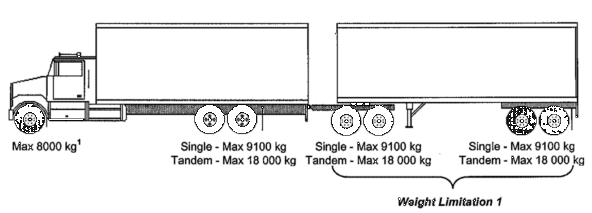
|
The maximum axle weight limits and maximum gross vehicle weight limits set out in this Section are for axles equipped with dual tires, except for steering axles. The maximum gross vehicle weight limit for a vehicle or combination of vehicles composed of axles equipped with single tires or a combination of single tires and dual tires is the sum of the maximum axle weight limits in Section C–Axle Weight Limits of Part 1–Vehicle Weight and Dimension Limits for the particular axles equipped with single tires or a combination of single tires and dual tires for a specified class of highway. The maximum gross vehicle weight limit of a vehicle or combination of vehicles equipped with single tires or a combination of single and dual tires must not exceed the maximum gross vehicle weight limit of a similar vehicle or combination of vehicles equipped, except for the steering axle, with dual tires for a specified class of highway. |
WEIGHT |
LIMIT |
Axle Weight Limits: |
|
Steering Axle |
Maximum 8000 kg1 |
Single Axle (dual tires) |
Maximum 9100 kg |
Tandem Axle (including tandem equivalent axle) |
|
Axle spread 1.2 m to 1.85 m |
Maximum 18 000 kg |
Weight Limitation 1: Sum of axle weights of full trailer 4 axle truck-trailer combination 5 axle truck-trailer combination 6 axle truck-trailer combination 7 axle truck-trailer combination |
Maximum 17 000 kg Maximum 17 000 kg Maximum 24 000 kg Maximum 31 000 kg |
Gross Vehicle Weight Limits: |
|
Maximum Weight Roads |
|
Four axles |
Maximum 34 100 kg |
Five axles |
Maximum 43 000 kg |
Six axles |
Maximum 50 000 kg |
Seven axles |
Maximum 53 500 kg |
Intermediate Weight Roads |
|
Four axles |
Maximum 34 100 kg |
Five axles |
Maximum 43 000 kg |
Six axles |
Maximum 49 500 kg |
Seven axles |
Maximum 49 500 kg |
All Other Highways |
|
Four axles |
Maximum 34 100 kg |
Five axles |
Maximum 41 500 kg |
Six axles |
Maximum 41 500 kg |
Seven axles |
Maximum 41 500 kg |
1 The maximum steering axle weight can be as high as 9100 kg for a vehicle or combination of vehicles if the load carrying capacity of the axle, tires, and all other components is not exceeded, and the tire loading does not exceed 10 kg/mm of width; however, the maximum gross vehicle weight limit will be based on a steering axle weight of 8000 kg.
Schedule A, Part 2, Category 8, Section 2 amended: O.I.C. 2005-583, N.S. Reg. 234/2005. O.I.C. 2006-547, N.S. Reg. 228/2006. O.I.C. 2007-406, N.S. Reg. 347/2007, O.I.C. 2009-52, N.S. Reg. 32/2009; O.I.C. 2010-5, N.S. Reg. 4/2010; O.I.C. 2013-164, N.S. Reg. 208/2013.
Category 9: Tandem Steering Axle Truck - Full Trailer Combination |
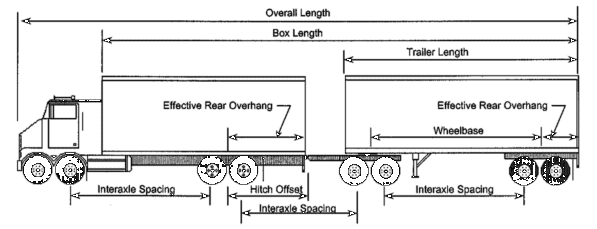
|
DIMENSION |
LIMIT |
Overall Length |
Maximum 23 m |
Overall Width |
Maximum 2.6 m |
Overall Height |
Maximum 4.15 m |
Box Length |
Maximum 20 m |
Truck |
|
Length |
Maximum 12.5 m |
Wheelbase |
Not Controlled |
Tandem steering axle spread |
Minimum 1.2 m/Maximum 2.2 m |
Tandem drive axle spread |
Minimum 1.2 m/Maximum 1.85 m |
Effective rear overhang |
Maximum 4.0 m |
Hitch offset |
Maximum 1.8 m |
Full Trailer |
|
Length |
Maximum 12.5 m |
Wheelbase |
Minimum 6.25 m |
Tandem axle spread |
Minimum 1.2 m/Maximum 1.85 m |
Track width |
Minimum 2.5 m/Maximum 2.6 m |
Effective rear overhang |
Maximum 35% of wheelbase |
Converter Dolly |
The use of a double drawbar or C Dolly is not permitted on this combination |
Interaxle Spacings |
|
Tandem Steering Axle to Tandem Drive Axle |
Minimum 3.65 m |
Single Axle to Single or Tandem Axle |
Minimum 3.0 m |
Tandem Axle to Tandem Axle |
Minimum 5.0 m |
Schedule A, Part 2, Category 9, Section 2 amended: O.I.C. 2010-5, N.S. Reg. 4/2010.
Category 9: Tandem Steering Axle Truck - Full Trailer Combination |
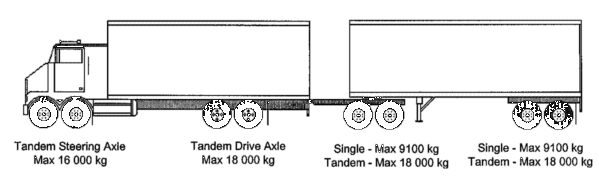
|
The maximum axle weight limits and maximum gross vehicle weight limits set out in this Section are for axles equipped with dual tires, except for steering axles. The maximum gross vehicle weight limit for a vehicle or combination of vehicles composed of axles equipped with single tires or a combination of single tires and dual tires is the sum of the maximum axle weight limits in Section C–Axle Weight Limits of Part 1–Vehicle Weight and Dimension Limits for the particular axles equipped with single tires or a combination of single tires and dual tires for a specified class of highway. The maximum gross vehicle weight limit of a vehicle or combination of vehicles equipped with single tires or a combination of single and dual tires must not exceed the maximum gross vehicle weight limit of a similar vehicle or combination of vehicles equipped, except for the steering axle, with dual tires for a specified class of highway. |
WEIGHT |
LIMIT |
Axle Weight Limits: |
|
Tandem Steering Axle |
Maximum 16 000 kg |
Single Axle (dual tires) |
Maximum 9100 kg |
Tandem Axle (including tandem equivalent axle) |
|
Axle spread 1.2 m to 1.85 m |
Maximum 18 000 kg |
Gross Vehicle Weight Limits: |
|
Maximum Weight Roads |
|
Six axles |
Maximum 51 000 kg1 |
Seven axles |
Maximum 53 500 kg1 |
Eight axles |
Maximum 53 500 kg1 |
Intermediate Weight Roads |
|
Six axles |
Maximum 49 500 kg1 |
Seven axles |
Maximum 49 500 kg1 |
Eight axles |
Maximum 49 500 kg1 |
All Other Highways |
|
Six axles |
Maximum 41 500 kg1 |
Seven axles |
Maximum 41 500 kg1 |
Eight axles |
Maximum 41 500 kg1 |
1 This weight limit is decreased in accordance with subsection 7(2) for a combination of vehicles with a tandem steering axle truck that does not meet the interaxle spacing limit of 3.65 m.
Schedule A, Part 2, Category 9, Section 2 amended: O.I.C. 2002-504, N.S. Reg. 140/2002; O.I.C. 2006-547, N.S. Reg. 228/2006; O.I.C. 2007-406, N.S. Reg. 347/2007, O.I.C. 2009-52, N.S. Reg. 32/2009; O.I.C. 2010-5, N.S. Reg. 4/2010; O.I.C. 2013-164, N.S. Reg. 208/2013.
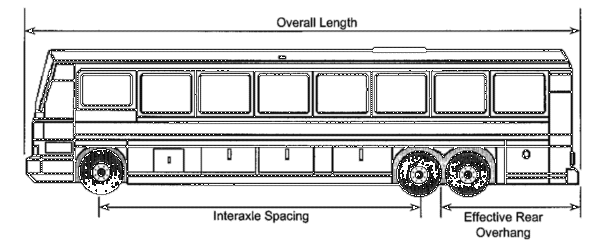
|
DIMENSION |
LIMIT |
Overall Length |
Maximum 14.0 m |
Overall Width |
Maximum 2.6 m |
Overall Height |
Maximum 4.15 m |
Wheelbase |
Not Controlled |
Tandem Axle Spread |
Minimum 1.2 m/Maximum 1.85 m |
Effective Rear Overhang |
Maximum 4.0 m |
Axle Requirements: Overall length 12.5 m or less Overall length greater than 12.5 m |
Not Controlled Minimum 3 axles |
Schedule A, Part 2, Category 10, Section 1 amended: O.I.C. 2005-583, N.S. Reg. 234/2005.
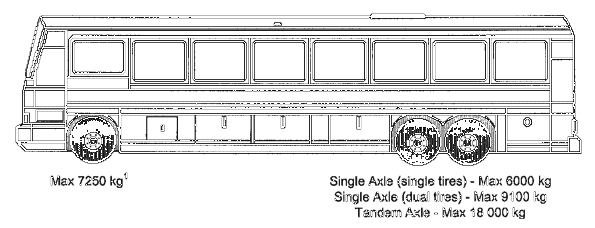
|
WEIGHT |
LIMIT |
Axle Weight Limits: |
|
Steering Axle |
Maximum 7250 kg1 |
Single Axle (dual tires) |
Maximum 9100 kg |
Single Axle (single tires) |
Maximum 6000 kg |
Tandem Axle (dual tires on both axles) |
Maximum 18 000 kg |
Gross Vehicle Weight Limits: |
|
Maximum Weight Roads |
|
Two axles (4 tires) |
Maximum 13 250 kg |
Two axles (6 tires) |
Maximum 16 350 kg |
Three axles (8 tires) |
Maximum 20 900 kg |
Three axles (10 tires) |
Maximum 25 250 kg |
Intermediate Weight Roads |
|
Two axles (4 tires) |
Maximum 13 250 kg |
Two axles (6 tires) |
Maximum 16 350 kg |
Three axles (8 tires) |
Maximum 20 900 kg |
Three axles (10 tires) |
Maximum 25 250 kg |
All Other Highways |
|
Two axles (4 tires) |
Maximum 13 250 kg |
Two axles (6 tires) |
Maximum 16 350 kg |
Three axles (8 tires) |
Maximum 20 900 kg |
Three axles (10 tires) |
Maximum 25 250 kg |
1 The maximum steering axle weight can be as high as 9100 kg if the load carrying capacity of the axle, tires, and all other components is not exceeded, and the tire loading does not exceed 10 kg/mm of width; however, the maximum gross vehicle weight limit will be based on a steering axle weight of 7250 kg.
Footnote 2 repealed: O.I.C. 2015-362, N.S. Reg. 364/2015.
Schedule A, Part 2, Category 10, Section 2 amended: O.I.C. 2005-583, N.S. Reg. 234/2005; O.I.C. 2009-52, N.S. Reg. 32/2009; O.I.C. 2015-362, N.S. Reg. 364/2015.
Category 10A: Intercity Bus and Recreational Vehicles with Pony Trailer |
Section 1 - Dimension Limits |
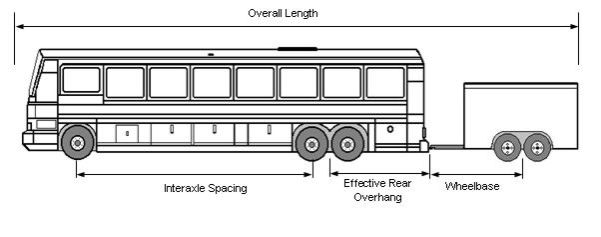
|
DIMENSION |
LIMIT |
Overall Length |
Maximum 20.0 m |
Overall Width |
Maximum 2.6 m |
Overall Height |
Maximum 4.15 m |
Intercity Bus |
|
Length |
Maximum 14.0 m |
Wheelbase |
Not Controlled |
Tandem axle spread |
Minimum 1.2 m/Maximum 1.85 m |
Effective rear overhang |
Maximum 4.0 m |
Axle Requirements |
|
Overall length 12.5 m or less |
Not Controlled |
Overall length greater than 12.5 m |
Minimum 3 axles |
Trailer |
|
Wheelbase |
Minimum 3.84 m |
Schedule A, Part 2, Category 10A, Section 1 added: O.I.C. 2011-255, N.S. Reg. 232/2011.
Category 10A: Intercity Bus and Recreational Vehicles with Pony Trailer |
Section 2 - Weight Limits |
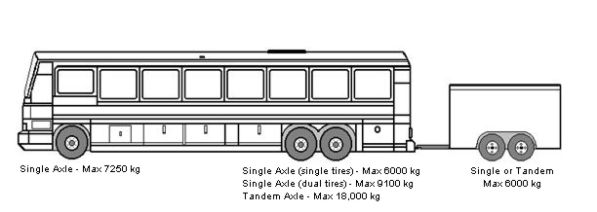
|
WEIGHT |
LIMIT |
Axle Weight Limits: |
|
Steering axle |
Maximum 7250 kg1 |
Single axle (dual tires) |
Maximum 9100 kg |
Single axle (single tires) |
Maximum 6000 kg |
Tandem axle (dual tires on both axles) |
Maximum 18 000 kg |
Trailer axle(s) (single or tandem axle, 2 or 4 tires on each axle) |
Maximum 6000 kg |
Gross Vehicle Weight Limits |
|
Maximum Weight Roads |
|
Two axle bus (4 tires) + pony trailer |
Maximum 19 250 kg |
Two axle bus (6 tires) + pony trailer |
Maximum 22 350 kg |
Three axle bus (8 tires) + pony trailer |
Maximum 26 900 kg |
Three axle bus (10 tires) + pony trailer |
Maximum 31 250 kg |
Intermediate Weight Roads |
|
Two axle bus (4 tires) + pony trailer |
Maximum 19 250 kg |
Two axle bus (6 tires) + pony trailer |
Maximum 22 350 kg |
Three axle bus (8 tires) + pony trailer |
Maximum 26 900 kg |
Three axle bus (10 tires) + pony trailer |
Maximum 31 250 kg |
All Other Highways |
|
Two axle bus (4 tires) + pony trailer |
Maximum 19 250 kg |
Two axle bus (6 tires) + pony trailer |
Maximum 22 350 kg |
Three axle bus (8 tires) + pony trailer |
Maximum 26 900 kg |
Three axle bus (10 tires) + pony trailer |
Maximum 31 250 kg |
1 The maximum steering axle weight can be as high as 9100 kg if the load-carrying capacity of the axle, tires, and all other components is not exceeded, and the tire loading does not exceed 10 kg/mm of width; however, the maximum gross vehicle weight limit will be based on a steering axle weight of 7250 kg.
Footnote 2 repealed: O.I.C. 2015-362, N.S. Reg. 364/2015.
Schedule A, Part 2, Category 10A, Section 2 added: O.I.C. 2011-255, N.S. Reg. 232/2011; amended: O.I.C. 2015-362, N.S. Reg. 364/2015.
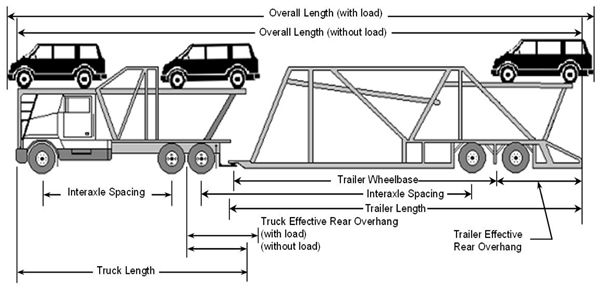
|
|
DIMENSION |
LIMIT |
Overall Length - without load - with load |
Maximum 23 m Maximum 25 m |
Overall Width |
Maximum 2.6 m1 |
Overall Height - without load - with load |
Maximum 4.15 m Maximum 4.3 m2 |
Truck |
|
Overall Length |
Maximum 12.5 m |
Tandem Axle Spread |
Minimum 1.2 m/Maximum 1.85 m |
Load Overhang at front of truck (beyond truck bumper) |
Maximum 1.0 m |
Effective Rear Overhang - without load - with load |
Maximum 4.0 m Maximum 4.6 m |
Trailer |
|
Length |
Maximum 14.65 m |
Wheelbase |
Minimum 6.25 m/Maximum 12.5 m |
Effective Rear Overhang |
Maximum 4 m or 42% of wheelbase, whichever is greater |
Load overhang at rear of trailer |
Maximum 1.2 m |
Track Width |
Maximum 2.6 m |
Interaxle Spacings |
|
Single Axle to Single or Tandem Axle |
Minimum 3.0 m |
Tandem Axle to Tandem Axle |
Minimum 5.0 m |
1 The maximum width for any load overhanging the front or rear of the combination of vehicles is 2.1 m.
2 The driver must ensure there is a safe clearance under any physical overpass, including structures and utility lines.
Schedule A, Part 2, Category 11, Section added: O.I.C. 2010-5, N.S. Reg. 4/2010.
Category 11: Stinger Steer Auto Carrier |
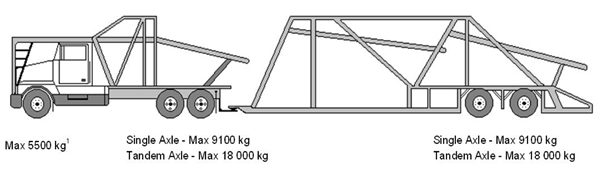
|
The maximum axle weight limits and maximum gross vehicle weight limits set out in this Section are for axles equipped with dual tires, except for steering axles. The maximum gross vehicle weight limit for a vehicle or combination of vehicles composed of axles equipped with single tires or a combination of single tires and dual tires is the sum of the maximum axle weight limits in Section C–Axle Weight Limits of Part 1–Vehicle Weight and Dimension Limits for the particular axles equipped with single tires or a combination of single tires and dual tires for a specified class of highway. The maximum gross vehicle weight limit of a vehicle or combination of vehicles equipped with single tires or a combination of single and dual tires must not exceed the maximum gross vehicle weight limit of a similar vehicle or combination of vehicles equipped, except for the steering axle, with dual tires for a specified class of highway. |
WEIGHT |
LIMIT |
Axle Weights Limits |
|
Steering Axle |
Maximum 5500 kg1 |
Single Axle (dual tires) |
Maximum 9100 kg |
Tandem Axle (including tandem equivalent axle) |
|
Axle Spread 1.2 m to 1.85 m |
Maximum 18 000 kg |
Maximum Weight Roads |
|
Three Axles |
Maximum 23 700 kg |
Four Axles |
Maximum 32 600 kg |
Five Axles |
Maximum 41 500 kg |
Intermediate Weight Roads |
|
Three Axles |
Maximum 23 700 kg |
Four Axles |
Maximum 32 600 kg |
Five Axles |
Maximum 41 500 kg |
All Other Highways |
|
Three Axles |
Maximum 23 700 kg |
Four Axles |
Maximum 32 600 kg |
Five Axles |
Maximum 41 500 kg |
1 The maximum steering axle weight can be as high as 9100 kg for a vehicle or combination of vehicles if the load-carrying capacity of the axle, tires, and all other components is not exceeded and the tire loading does not exceed 10 kg/mm of width; however, the maximum gross vehicle weight limit will be based on a steering axle weight of 5500 kg.
Schedule A, Part 2, Category 11, Section 2 added: O.I.C. 2010-5, N.S. Reg. 4/2010.
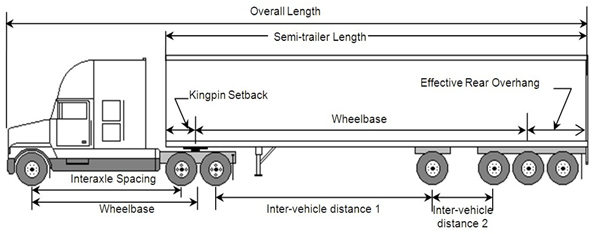
|
DIMENSION |
LIMIT |
Overall Length |
Maximum 23 m |
Overall Width |
Maximum 2.6 m |
Overall Height |
Maximum 4.15 m |
Tractor |
|
Wheelbase |
Maximum 6.2 m |
Tandem axle spread |
Minimum 1.2 m/Maximum 1.85 m |
Semi-trailer1 |
|
Length |
Maximum 16.2 m |
Wheelbase |
Maximum 12.5 m |
Kingpin Setback |
Maximum 2.0 m radius |
Effective Rear Overhang |
Maximum 35% of wheelbase |
Tridem axle spread2 |
Minimum 3.0 m/Maximum 3.7 m |
Inter-vehicle distance 1 - tridem spread 3.0 m to 3.7 m - tridem spread 3.6 m to 3.7 m |
Minimum 6.0 m Minimum 5.5 m |
Inter-vehicle distance 2 |
Minimum > 2.5 m/Maximum 3.0 m |
Track Width |
Minimum 2.5 m/Maximum 2.6 m |
Interaxle Spacing |
|
Steering axle to Tandem Axle |
Minimum 3.0 m |
1 The semi-trailer, if used to carry liquid bulk products, must be equipped with an electronic vehicle stability system.
2The tridem axle must utilize a full air suspension system.
Schedule A, Part 2, Category 12, Section 1, footnote 1 amended: O.I.C. 2020-065, N.S. Reg. 32/2020.
Schedule A, Part 2, Category 12, Section 1 added: O.I.C. 2010-5, N.S. Reg. 4/2010.
Category 12: Tractor Self-Steering Quad Axle Semi-trailer |
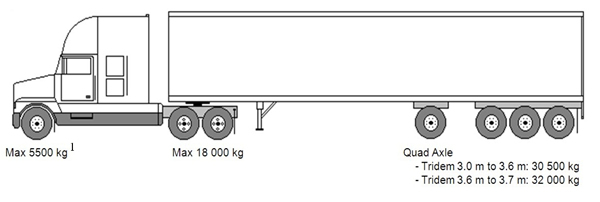
|
WEIGHT |
LIMIT |
Axle Weights Limits |
|
Steering Axle |
Maximum 5500 kg1 |
Self-Steering Axle2 |
Maximum 8000 kg |
Tandem Axle (including tandem equivalent axle) |
|
Axle Spread 1.2 m to 1.85 m |
Maximum 18 000 kg |
Self-Steering Quad Axle3 |
|
Tridem axle spread 3.0 m to less than 3.6 m |
Maximum 30 500 kg |
Tridem axle spread 3.6 m to 3.7 m |
Maximum 32 000 kg |
Gross Vehicle Weight Limits |
|
Maximum Weight Roads |
|
Seven axles - tridem 3.0 m to less than 3.6 m |
Maximum 54 000 kg |
Seven axles - tridem 3.6 m to 3.7 m |
Maximum 55 500 kg |
Intermediate Weight Roads |
Maximum 49 500 kg4, 5 |
All Other Highways |
Maximum 41 500 kg6 |
1 The maximum steering axle weight can be as high as 9100 kg for a vehicle or combination of vehicles if the load-carrying capacity of the axle, tires, and all other components is not exceeded and the tire loading does not exceed 10 kg/mm of width; however, the maximum gross vehicle weight limit will be based on a steering axle weight of 5500 kg.
2 The self-steering axle may be equipped with single tires with a minimum width of 365 mm, or with dual tires. The self-steering axle may be liftable, but the controls, whether remote or manual, to raise or lower the self-steering axle must be located on the semi-trailer only, except for a semi-trailer used to carry raw forest products where the control may be in the cab of the tractor. The self-steering axle may be automatically raised when the vehicle is reversing. The self-steering axle may be manually raised to provide emergency drive axle traction, but only if the controls to manually raise the self-steering axle do not activate unless the emergency 4-way flashers are activated, and the controls must include a device which prevents the raising the self-steering axle at any speed greater than 60 km/hr.
3 The self-steering quad axle semi-trailer must be equipped with a device that accurately displays the total weight on the self-steering quad axle in kilograms, or with a device and a table or chart from the combined use of which the total weight on the self-steering quad axle in kilograms may be readily and accurately obtained.
4 For roads listed in Schedule B to the Road List Regulations made under the Act, the maximum weight is 54 000 kg for 7 axles with a tridem axle spread of 3.0 m to less than 3.6 m, and 55 500 kg for 7 axles with a tridem axle spread of 3.6 m to 3.7 m.
5 Maximum quad axle weight is 26 000 kg.
6 Maximum quad axle weight is 18 000 kg.
Schedule A, Part 2, Category 12, Section 2, table replaced: O.I.C. 2015-362, N.S. Reg. 364/2015.
Schedule A, Part 2, Category 12, Section 2 added: O.I.C. 2010-5, N.S. Reg. 4/2010.
Schedule A-1: Maximum Semi-trailer Wheelbases
Tractor Wheelbase |
Maximum Semi-trailer Wheelbase |
6.2 m and greater |
12.50 m |
> 6.2 m to 6.3 m |
12.47 m |
> 6.3 m to 6.4 m |
12.40 m |
> 6.4 m to 6.5 m |
12.33 m |
> 6.5 m to 6.6 m |
12.27 m |
> 6.6 m to 6.7 m |
12.20 m |
> 6.7 m to 6.8 m |
12.13 m |
> 6.8 m to 6.9 m |
12.07 m |
> 6.9 m to 7.0 m |
12.00 m |
> 7.0 m to 7.1 m |
11.93 m |
> 7.1 m to 7.2 m |
11.87 m |
Schedule A-1 added: O.I.C. 2010-5, N.S. Reg. 4/2010.
Schedule A-2: Pony Trailer Axle Weight Limits for Pony Trailers Model Year 2002
and Earlier
Wheelbase |
Maximum Axle Weight |
|
2-axle |
3-axle |
|
6.25 m and greater |
18 000 kg |
21 000 kg |
5.75 m - 6.24 m |
17 000 kg |
20 000 kg |
5.25 m - 5.74 m |
16 000 kg |
19 000 kg |
4.75 m - 5.24 m |
15 000 kg |
17 750 kg |
4.25 m - 4.74 m |
14 000 kg |
16 500 kg |
3.75 m - 4.24 m |
13 000 kg |
15 000 kg |
3.25 m - 3.74 m |
12 000 kg |
13 500 kg |
Schedule A-2 added: O.I.C. 2010-5, N.S. Reg. 4/2010; replaced: O.I.C. 2011-255, N.S. Reg. 232/2011.
Schedule A-3: Semi-trailer Axle Weight Limits for Semi-trailers Model Year 2002
and Earlier
Maximum Weight Roads |
|||||
Wheelbase |
Single |
Tandem |
Tridem and Triaxle |
||
Axle spread: 2.4 m to <3.0 m |
Axle spread: 3.0 m to <3.6 m |
Axle spread: 3.6 m to <3.7 m1 |
|||
6.25 m and greater |
9100 kg |
18 000 kg |
21 000 kg |
24 000 kg |
26 000 kg |
5.75 m - 6.24 m |
8100 kg |
17 000 kg |
20 000 kg |
23 000 kg |
25 000 kg |
5.25 m - 5.74 m |
7100 kg |
16 000 kg |
19 000 kg |
22 000 kg |
24 000 kg |
4.75 m - 5.24 m |
6100 kg |
15 000 kg |
18 000 kg |
21 000 kg |
23 000 kg |
4.25 m - 4.74 m |
5100 kg |
14 000 kg |
17 000 kg |
20 000 kg |
22 000 kg |
3.75 m - 4.24 m |
4100 kg |
13 000 kg |
16 000 kg |
19 000 kg |
21 000 kg |
Intermediate Weight Roads and B-Train Routes |
|||||
Wheelbase |
Single |
Tandem |
Tridem and Triaxle |
||
Axle spread: 2.4 m to <3.0 m |
Axle spread: 3.0 m to <3.6 m |
Axle spread: 3.6 m to <3.7 m1 |
|||
6.25 m and greater |
9100 kg |
18 000 kg |
21 000 kg |
24 000 kg |
24 000 kg |
5.75 m - 6.24 m |
8100 kg |
17 000 kg |
20 000 kg |
23 000 kg |
24 000 kg |
5.25 m - 5.74 m |
7100 kg |
16 000 kg |
19 000 kg |
22 000 kg |
24 000 kg |
4.75 m - 5.24 m |
6100 kg |
15 000 kg |
18 000 kg |
21 000 kg |
23 000 kg |
4.25 m - 4.74 m |
5100 kg |
14 000 kg |
17 000 kg |
20 000 kg |
22 000 kg |
3.75 m - 4.24 m |
4100 kg |
13 000 kg |
16 000 kg |
19 000 kg |
21 000 kg |
All Other Highways |
|||||
Wheelbase |
Single |
Tandem |
Tridem and Triaxle |
||
Axle spread: 2.4 m to <3.0 m |
Axle spread: 3.0 m to <3.6 m |
Axle spread: 3.6 m to <3.7 m1 |
|||
6.25 m and greater |
9100 kg |
18 000 kg |
18 000 kg |
18 000 kg |
18 000 kg |
5.75 m - 6.24 m |
8100 kg |
17 000 kg |
18 000 kg |
18 000 kg |
18 000 kg |
5.25 m - 5.74 m |
7100 kg |
16 000 kg |
18 000 kg |
18 000 kg |
18 000 kg |
4.75 m - 5.24 m |
6100 kg |
15 000 kg |
18 000 kg |
18 000 kg |
18 000 kg |
4.25 m - 4.74 m |
5100 kg |
14 000 kg |
17 000 kg |
18 000 kg |
18 000 kg |
3.75 m - 4.24 m |
4100 kg |
13 000 kg |
16 000 kg |
18 000 kg |
18 000 kg |
1 Also applies to tridems with axle spreads greater than 3.7 m, and to triaxles with axle spreads up to 4.9 m.
Schedule A-3 added: O.I.C. 2010-5, N.S. Reg. 4/2010; replaced: O.I.C. 2011-255, N.S. Reg. 232/2011.
Schedule A-4 repealed: O.I.C. 2011-255, N.S. Reg. 232/2011.
Schedule B repealed: O.I.C. 2011-255, N.S. Reg. 232/2011.
Schedule C repealed: O.I.C. 2011-255, N.S. Reg. 232/2011.
Schedule D repealed: O.I.C. 2011-255, N.S. Reg. 232/2011.
Legislative History
Reference Tables
Weights and Dimensions Regulations |
N.S. Reg. 137/2001 |
Motor Vehicle Act |
|
Note: The information in these tables does not form part of the regulations and is compiled by the Office of the Registrar of Regulations for reference only. |
|
Source Law
The current consolidation of the Weights and Dimensions Regulations made under the Motor Vehicle Act includes all of the following regulations:
N.S. |
In force |
How in force |
Royal Gazette |
137/2001
|
Nov 15, 2001 |
date specified |
Nov 30, 2001 |
140/2002 |
Nov
15, 2002
|
date
specified
|
Nov
29, 2002
|
234/2005 |
Dec
20, 2005
|
date
specified
|
Jan 6,
2006
|
228/2006 |
Dec
18, 2006
|
date
specified
|
Jan 5,
2007
|
347/2007 |
Jul
20, 2007
|
date
specified
|
Aug 3,
2007
|
32/2009 |
Feb
27, 2009
|
date
specified
|
Feb
27, 2009
|
4/2010 |
Jan
12, 2010
|
date
specified
|
Jan
29, 2010
|
47/2010 |
Apr 9,
2010
|
date
specified
|
Apr 9,
2010
|
232/2011 |
Jul 5,
2011
|
date
specified
|
Jul
29, 2011
|
208/2013 |
May
14, 2013
|
date
specified
|
May
31, 2013
|
364/2015 |
Dec 1,
2015
|
date
specified
|
Dec
11, 2015
|
32/2020 |
Feb
24, 2020
|
date
specified
|
Mar
13, 2020
|
The following regulations are not yet in force and are not included in the current consolidation:
N.S. |
In force |
How in force |
Royal Gazette |
|
|
|
|
|
|
|
|
*See subsection 3(6) of the Regulations Act for
rules about in force dates of regulations.
ad. = added |
fc. = fee change |
rep.=repealed |
|
|
Provision affected
|
How affected
|
|||
2.................................................................... |
am. 364/2015 (clause
lettering removed)
|
|||
2(a) defn. of “1992 Regulations”................. |
rep. 4/2010
|
|||
2(da) defn. of “aerodynamic device”........... |
ad.
4/2010
|
|||
2, defn. of “aerodynamic device”, (i)...... |
rs. 364/2015
|
|||
2, defn. of “aerodynamic device”, (ii)..... |
am. 364/2015
|
|||
2, defn. of “aerodynamic device”, (vi).... |
ad.
364/2015
|
|||
2(h) defn. of “axle group”, (vii)................... |
ad.
4/2010
|
|||
2(l) defn. of “box length”............................. |
am. 4/2010
|
|||
2(ta) defn. of “dry bulk products”................ |
ad.
4/2010
|
|||
2, defn. of “dry bulk products”... |
rep. 32/2020
|
|||
2(u) defn. of “effective rear overhang”........ |
am. 4/2010
|
|||
2(af) defn. of “implement of husbandry”..... |
rs. 228/2006
|
|||
2(ak) defn. of “length”, (i)-(iv).................... |
am. 4/2010
|
|||
2(ala) defn. of “liquid bulk products”.......... |
ad.
4/2010
|
|||
2, defn. of “load equalization”..................... |
am. 364/2015
|
|||
2(ap) defn. of “overall length”..................... |
am. 4/2010
|
|||
2(ara) defn. of “raw forest products”........... |
ad.
4/2010
|
|||
2(as) defn. of “rear overhang”...................... |
am. 4/2010
|
|||
2(ata) defn. of “self-steering quad axle”...... |
ad.
4/2010
|
|||
2(bn) defn. of “tridem equivalent axle” ...... |
am. 140/2002; rs.
228/2006
|
|||
3(5)(b)........................................................... |
am. 4/2010
|
|||
3(5)(c)........................................................... |
am. 4/2010
|
|||
3(5)(c)(iii)..................................................... |
am. 140/2002
|
|||
4(3)............................................................... |
am. 4/2010
|
|||
4(5)............................................................... |
am. 228/2006 |
|||
4(6)............................................................... |
rs. 4/2010 |
|||
4(6A)-(6B).................................................... |
ad.
4/2010
|
|||
4(9)-(13)....................................................... |
rep. 4/2010
|
|||
5(1)............................................................... |
am. 140/2002
|
|||
5(1)(c)........................................................... |
rs. 347/2007 |
|||
5(1)(c)(iii)(D)............................................... |
am. 232/2011
|
|||
5(1)(e)........................................................... |
am. 364/2015
|
|||
5(1)(g)........................................................... |
am. 140/2002
|
|||
6(1)............................................................... |
am. 140/2002
|
|||
6(4)............................................................... |
ra. 6(6) 140/2002
|
|||
6(4)............................................................... |
ad.
140/2002
|
|||
6(5)............................................................... |
ad.
140/2002; am. 234/2005, 228/2006; rep.
4/2010
|
|||
6(6)............................................................... |
ra. from 6(4) 140/2002
|
|||
7(2A)............................................................ |
ad. 4/2010; rs. 232/2011
|
|||
7(2B)............................................................. |
ad. 4/2010
|
|||
7(2B)(a)........................................................ |
rs. 232/2011
|
|||
7(3)............................................................... |
rs. 4/2010
|
|||
7(4)............................................................... |
ad.
4/2010
|
|||
8(1)............................................................... |
am. 4/2010
|
|||
8(4)............................................................... |
am. 234/2005, 228/2006; rep. 4/2010
|
|||
9(1)(a)........................................................... |
am. 232/2011
|
|||
9(1)(b)........................................................... |
am. 32/2009, 232/2011
|
|||
9(1)(ba)......................................................... |
ad.
4/2010; am. 232/2011
|
|||
13.................................................................. |
rs. 228/2006
|
|||
13(2)........................................................ |
rs. 4/2010
|
|||
14.................................................................. |
ad.
228/2006
|
|||
14(1)........................................................ |
am. 4/2010, 208/2013 |
|||
14(2)........................................................ |
am. 4/2010
|
|||
Schedule A |
|
|||
Explanatory note.......................................... |
am. 140/2002
|
|||
Part 1, Sec. A................................................ |
rs. 364/2015 |
|||
Part 1, Sec. A, table..................... |
am. 4/2010
|
|||
Part 1, Sec. A, footnote 2............ |
am. 140/2002 |
|||
Part 1, Sec. A, footnote 4-6......... |
ad. 4/2010
|
|||
Part 1, Sec. B................................................ |
am. 347/2007
|
|||
Part 1, Sec. B, table..................... |
am. 4/2010, 364/2015
|
|||
Part 1, Sec. B, footnote 5........................ |
ad.
347/2007
|
|||
Part 1, Sec. B, footnote 6-8..................... |
ad.
4/2010
|
|||
Part 1, Sec. C................................................ |
rs. 140/2002, 347/2007;
am. 32/2009, 208/2013
|
|||
Part 1, Sec. C, table..................... |
am. 234/2005, 4/2010
|
|||
Part 1, Sec. C, footnotes 3, 7-9, and 18 |
rep. 4/2010
|
|||
Part 1, Sec. C, footnotes 4-6 and 11-17 |
am. 4/2010
|
|||
Part 1, Sec. C, footnote 10.......... |
am. 234/2005, 228/2006; rep. 4/2010
|
|||
Part 1, Sec. D................................................ |
am. 208/2013, 364/2015
|
|||
Part 1, Sec. E................................................ |
am. 234/2005, 228/2006,
4/2010
|
|||
Part 2............................................................ |
am. 234/2005 (“January
1, 2006” replaced throughout), 228/2006 (“December 31, 2006” replaced
throughout; “January 1, 2007” replaced throughout), 347/2007
|
|||
Part 2, Cat. 1, Sec 1..................... |
rs. 4/2010
|
|||
Part 2, Cat. 1, Sec. 2.................... |
rs. 140/2002; am.
228/2006, 347/2007, 32/2009; rs. 4/2010; am. 208/2013
|
|||
Part 2, Cat. 1, Sec. 2, footnote 9. |
am. 234/2005
|
|||
Part 2, Cat. 1, Sec. 2, footnote 17 |
am. 234/2005; rep. 208/2013
|
|||
Part 2, Cat. 1, Sec. 2, footnote 18 |
am. 234/2005, 228/2006,
232/2011
|
|||
Part 2, Cat. 1, Sec. 2, footnotes 19-23 |
am. 234/2005 |
|||
Part 2, Cat. 1, Sec. 2, footnotes 24-25 |
am. 234/2005; rep. 228/2006
|
|||
Part 2, Cat. 1, Sec. 2, footnotes 26-35
|
am. 234/2005
|
|||
Part 2, Cat. 1, Sec. 2, footnotes 36-43 |
ad.
228/2006
|
|||
Part 2, Cat. 1A............................. |
ad.
364/2015
|
|||
Part 2, Cat. 2, Sec. 2.................... |
am. 347/2007, 32/2009, 4/2010,
208/2013
|
|||
Part 2, Cat. 2, Sec. 2, footnotes 2-5 |
am. 234/2005; rep. 4/2010
|
|||
Part 2, Cat. 3, Sec. 1.................... |
rs. 234/2005
|
|||
Part 2, Cat. 3, Sec. 1, table.......... |
rs. 364/2015
|
|||
Part 2, Cat. 3, Sec. 2.................... |
am. 347/2007, 32/2009, 4/2010,
232/2011, 208/2013
|
|||
Part 2, Cat. 3, Sec. 2, footnote 2. |
am. 234/2005; rep. 4/2010
|
|||
Part 2, Cat. 3, Sec. 2, footnote 2. |
ra. from footnote 7 232/2011; am. 232/2011 |
|||
Part 2, Cat. 3, Sec. 2, footnotes 3-6 |
am. 234/2005; rep. 4/2010
|
|||
Part 2, Cat. 3, Sec. 2, footnote 7. |
ad.
32/2009; ra. as footnote 2 232/2011
|
|||
Part 2, Cat. 4, Sec. 2.................... |
am. 347/2007, 32/2009, 4/2010,
208/2013
|
|||
Part 2, Cat. 4, Sec. 2, footnotes 2-5 |
am. 234/2005; rep. 4/2010
|
|||
Part 2, Cat. 5, Sec. 1.................... |
am. 4/2010 |
|||
Part 2, Cat. 5, Sec. 1, footnote 1. |
ad.
4/2010
|
|||
Part 2, Cat. 5, Sec. 2.................... |
am. 347/2002, 32/2009, 4/2010
|
|||
Part 2, Cat. 5, Sec. 2, footnote 2. |
ad.
4/2010
|
|||
Part 2, Cat. 6, Sec. 1.................... |
am. 4/2010, 232/2011, 208/2013
|
|||
Part 2, Cat. 6, Sec. 1, footnote 2. |
ad.
4/2010; rep. 232/2011
|
|||
Part 2, Cat. 6, Sec. 2.................... |
am. 347/2007, 32/2009, 4/2010,
232/2011
|
|||
Part 2, Cat. 6, Sec. 2, footnote 2. |
am. 234/2005; rs.
4/2010, 232/2011
|
|||
Part 2, Cat. 6, Sec. 2, footnotes 3-4 |
ad.
4/2010; rep. 232/2011
|
|||
Part 2, Cat. 7, Sec. 1.................... |
am. 4/20104,
232/2011, 208/2013
|
|||
Part 2, Cat. 7, Sec. 1, footnote 2. |
ad.
4/2010; rep. 232/2011
|
|||
Part 2, Cat. 7, Sec. 2.................... |
am. 347/2007, 32/2009, 4/2010,
47/20105, 232/2011, 208/2013
|
|||
Part 2, Cat. 7, Sec. 2, footnote 1. |
am. 234/2005; rs.
4/2010, 232/2011
|
|||
Part 2, Cat. 7, Sec. 2, footnote 2. |
am. 234/2005; rs.
4/2010; rep. 232/2011
|
|||
Part 2, Cat. 7, Sec. 2, footnote 3. |
ad.
4/2010; rep. 232/2011
|
|||
Part 2, Cat. 7, Sec. 2, footnote 4. |
ad.
4/2010
|
|||
Part 2, Cat. 8, Sec. 2.................... |
am. 47/2007, 32/2009, 4/2010, 208/2013 |
|||
Part 2, Cat. 8, Sec. 2, footnote 2. |
am. 234/2005; rep. 4/2010
|
|||
Part 2, Cat. 8, Sec. 2, footnote 3. |
am. 234/20051; rep. 4/2010
|
|||
Part 2, Cat. 9, Sec. 1.................... |
am. 4/2010
|
|||
Part 2, Cat. 9, Sec. 2.................... |
am. 140/2002, 347/2007,
32/2009, 4/2010, 208/2013
|
|||
Part 2, Cat. 9, Sec. 2, footnote 1. |
am. 234/2005; rs.
4/2010
|
|||
Part 2, Cat. 9, Sec. 2, footnote 2. |
am. 234/2005; rep. 4/2010 |
|||
Part 2, Cat. 10, Sec 2................... |
am. 32/2009, 364/2015
|
|||
Part 2, Cat. 10, Sec. 2, footnote 2 |
rep. 364/2015
|
|||
Part 2, Cat. 10A........................... |
ad.
232/2011
|
|||
Part 2, Cat. 10A, Sec. 2............... |
am. 364/2015
|
|||
Part 2, Cat. 10A, Sec. 2, footnote 2 |
rep. 364/2015
|
|||
Part 2, Cat 11............................... |
ad.
4/2010
|
|||
Part 2, Cat 12, Sec 1.................... |
ad.
4/2010
|
|||
Part 2, Cat. 12, Sec. 1, footnote 1 |
am. 32/2020
|
|||
Part 2, Cat. 12, Sec. 2.................. |
ad.
4/2010; am. 208/2013; rs. 364/2015
|
|||
Part 2, Cat. 12, Sec. 2, footnote 4 |
ad.
208/2013
|
|||
Schedule A-1
|
|
|||
Schedule A-1................................................ |
ad.
4/2010
|
|||
Schedule A-2
|
|
|||
Schedule A-2................................................ |
ad.
4/2010; rs. 232/2011
|
|||
Schedule A-3 |
|
|||
Schedule A-3................................................ |
ad.
4/2010; rs. 232/2011
|
|||
Schedule A-4 |
|
|||
Schedule A-4................................................ |
ad.
4/2010; rep. 232/2011
|
|||
Schedule B |
|
|||
Schedule B.................................................... |
rep. 232/2011
|
|||
Annapolis County, item 6....................... |
rs. 234/2005
|
|||
Annapolis County, items 10-13.............. |
ad. 140/2002
|
|||
Annapolis County, item 14..................... |
ad. 140/2002; rep. 228/2006
|
|||
Annapolis County, items 15-18.............. |
ad. 140/2002
|
|||
Annapolis County, items 19-25.............. |
ad. 234/2005
|
|||
Annapolis County, item 26..................... |
ad. 234/2005; rs. 228/2006
|
|||
Annapolis County, items 27-38.............. |
ad. 228/2006
|
|||
Cape Breton County, item 2................... |
ad. 4/2010
|
|||
Colchester County, item 4(a)................. |
rep. 4/2010
|
|||
Colchester County, item 5...................... |
rs. 4/2010
|
|||
Colchester County, item 6...................... |
rep. 4/2010
|
|||
Colchester County, item 7(b)................. |
rep. 4/2010
|
|||
Colchester County, items 11-15............. |
rep. 347/2007
|
|||
Colchester County, item 80.................... |
rs. 234/2005
|
|||
Colchester County, items 95(c)-(d)........ |
rep. 4/2010
|
|||
Colchester County, item 98(a)............... |
rs. 4/2010
|
|||
Colchester County, items 106-108......... |
ad. 140/2002
|
|||
Colchester County, items 109-114......... |
ad. 234/2005
|
|||
Colchester County, items 115-122......... |
ad. 347/2007
|
|||
Cumberland County, items 88-91.......... |
ad. 140/2002
|
|||
Cumberland County, items 92-94.......... |
ad. 234/2005
|
|||
Cumberland County, items 95-99.......... |
ad. 228/2006
|
|||
Cumberland County, items 100-103...... |
ad. 347/2007
|
|||
Cumberland County, items 104-111...... |
ad. 4/2010
|
|||
Digby County, item 1............................. |
rs. 140/2002
|
|||
Digby County, item 6............................. |
rs. 347/2007
|
|||
Digby County, item 8............................. |
rs. 234/2005
|
|||
Digby County, item 10........................... |
rs. 234/2005
|
|||
Digby County, item 11........................... |
ad. 140/2002
|
|||
Digby County, items 12......................... |
ad.
234/2005; rs. 4/2010
|
|||
Digby County, items 13-25.................... |
ad.
234/2005
|
|||
Digby County, item 26........................... |
ad.
234/2005; rep. 347/2007
|
|||
Digby County, item 27........................... |
ad.
234/2005
|
|||
Digby County, items 28-32.................... |
ad.
228/2006
|
|||
Digby County, items 33-38.................... |
ad.
4/2010
|
|||
Halifax County, items 6-11.................... |
ad.
234/2005
|
|||
Hants County, items 28-32..................... |
ad.
234/2005
|
|||
Hants County, items 33-45..................... |
ad.
4/2010
|
|||
Inverness County, items 14-15............... |
ad.
4/2010
|
|||
Kings County, items 33-37..................... |
ad.
234/2005
|
|||
Kings County, item 38........................... |
ad.
228/2006
|
|||
Lunenburg County, items 16-19............. |
ad.
234/2005
|
|||
Lunenburg County, items 20-24............. |
ad.
4/2010
|
|||
Pictou County, item 65........................... |
ad.
140/2002
|
|||
Pictou County, items 66-67.................... |
ad.
234/2005
|
|||
Pictou County, items 68-69.................... |
ad.
347/2007
|
|||
Shelburne County, items 2-3.................. |
ad.
4/2010
|
|||
Yarmouth County, item 4....................... |
rs. 347/2007
|
|||
Yarmouth County, item 5....................... |
ad.
234/2005; rep. 347/2007
|
|||
Yarmouth County, items 6-7.................. |
ad.
234/2005
|
|||
Yarmouth County, item 8....................... |
ad.
228/2006
|
|||
Schedule C:
|
|
|||
Schedule C.................................................... |
rep. 232/2011
|
|||
1(bx)....................................................... |
am. 347/2007
|
|||
1(by)....................................................... |
am. 347/2007
|
|||
1(bz)....................................................... |
ad.
347/2007
|
|||
1(ca)........................................................ |
ad. 4/2010
|
|||
1(u)......................................................... |
rs. 234/2005
|
|||
3.............................................................. |
am. 347/2007
|
|||
3(ae)........................................................ |
am. 347/2007 |
|||
3(af)........................................................ |
am. 347/2007
|
|||
3(ag)-(ah)................................................ |
ad.
347/2007
|
|||
3(f).......................................................... |
rs. 234/2005
|
|||
4(u)......................................................... |
rs. 347/2007
|
|||
4(az)........................................................ |
am. 347/2007
|
|||
4(ba)....................................................... |
am. 347/2007 |
|||
4(bb)-(bc)............................................... |
ad.
347/2007
|
|||
4(bd)-(bf)................................................ |
ad.
4/2010
|
|||
6(a)......................................................... |
rs. 347/2007
|
|||
6(k)......................................................... |
ad.
228/2006
|
|||
8(g)......................................................... |
rs. 347/2007
|
|||
11(s)........................................................ |
ad.
228/2006
|
|||
Schedule D:
|
|
|||
Schedule D................................................... |
ad.
32/2009; rs. 4/2010; rep. 232/2011
|
|||
Note that changes to headings are not included in the above table.
Editorial Notes and Corrections
|
Note |
Effective |
1 |
Second footnote 2 in original text renumbered as footnote 3 for the purposes of this consolidation. |
|
2 |
References to the Department and Minister of Transportation and Public Works should be read as references to the Department and Minister of Transportation and Infrastructure Renewal in accordance with O.I.C. 2007-553 under the Public Service Act, R.S.N.S. 1989, c. 376. (Corrected by N.S. Reg. 4/2010)
|
Oct 23, 2007 |
3 |
The reference to the Minister of Service Nova Scotia and Municipal Relations in s. 11(8) should be read as a reference to the Minister of Service Nova Scotia in accordance with O.I.C. 2014-71 under the Public Service Act, R.S.N.S. 1989, c. 376. |
Apr 1, 2014 |
4 |
The reference to the Minister of Service Nova Scotia and Municipal Relations in s. 11(8) should be read as a reference to the Minister of Service Nova Scotia and Internal Services in accordance with O.I.C. 2019-149 under the Public Service Act, R.S.N.S. 1989, c. 376. |
Jun 3, 2019 |
5 |
N.S. Reg. 4/2010, made by O.I.C. 2010-5, is amended by N.S. Reg. 47/2010 to correct the length of tandem axle spread. |
Apr 9, 2010 |
6 |
References to the Department of Transportation and Infrastructure Renewal should be read as references to the Department of Transportation and Active Transit in accordance with O.I.C. 2021-56 under the Public Service Act, R.S.N.S. 1989, c. 376. |
Feb 23, 2021 |
7 |
References to the Department of Transportation and Infrastructure Renewal should be read as references to the Department of Public Works in accordance with O.I.C. 2021-209 under the Public Service Act, R.S.N.S. 1989, c. 376. |
Aug 31, 2021 |
Repealed and Superseded:
N.S. |
Title |
In force |
Repealed |
|
|
|
|
Note: Only regulations that are specifically repealed and replaced appear in this table. It may not reflect the entire history of regulations on this subject matter.